Showing posts with label oltrepo pavese. Show all posts

Saturday, May 9, 2026

Bollicine di Primavera: Italy's Finest Sparkling Wines

Italian sparkling wines at one point in time may have been remembered and enjoyed as being something sweet and sparkling to be enjoyed during a celebratory event.  The Prosecco of the past was something fizzy that didn’t maybe spark much interest and don't even get me started on Lambrusco and what that was known for.  Italy’s history of Italian bubbly was nowhere what it is today.The game has changed! 

The many sparkling wines of Italy 

Today, Italian sparkling wines are some of the most exciting wines in the bubbly world of wine.  From the bone dry Franciacortas of Lombardy that rival some of the best champagnes of France, to the variety of Lambrusco from Emilia Romagna, to the prestigious destinations for Prosecco including Asolo and Conegliano Valdobbiadene. Don’t forget about some of the others to include Trento DOC from the Trentino region, Alta Langa from Piedmont, those from the Oltrepo Pavese in Lombardy to name a few.   

In addition what I think has also stepped up the attention of these wines is the use of some of these beverages in the many mixed cocktails.  Italy has always been known for its aperitivo, but new generations are experiencing spritz driven beverages using Italy’s sparkling wines in a variety of ways. 

Italian sparkling wines are increasing in popularity and Prosecco is leading the pack.  In the first half of 2025, Gambero Rossi stated that Italian sparklers, led by Prosecco, are dominating sales for sparkling wines by volume totaling about $1 billion.  They even mention that Prosecco has a slight edge over Champagne in the US market as well with Asolo and Conegliano Valddobiadene showing sustaining growth. 

map of Prosecco appellations
Prosecco wine map copyright of Wine Scholar Guild

The Wines 

I’ve been meaning to share some of these wines for some time so I’m excited about this month’s theme.  Today we’ll take a look into Prosecco in particular highlighting those from the Asolo and Valdobbiandene Conegliano designations and a special treat from the Oltrepo Pavese. 

Oltrepo Pavese Sparkling Wine 

The Oltrepo Pavese is the largest wine appellation in the Lombardy region of northern Italy.  The Oltrepo’s primary grape is Pinot Nero and like today’s wine that I’m sharing, the sparkling wines from here are made using the classic method similar to Champagne known as metodo Classico. 

The wine I'm sharing today comes from La Versa, which was founded in 1905 by Cesare Gustavo Faravelli.  This is a cooperative in La Valle Versa working with around 20 wine growers and farmers.  Sparkling wine production is very important to this winery’s success and their first traditional method sparkling wine that they produced was in 1935.  The winery was later acquired by the Terrie d’Oltrepo Group in 2017 and is now one of the large cooperatives in northern Italy with over 660 members covering 1,200 acres. 

I’m sharing the La Versa” Collezione Metodo Classico Oltrepo Pavese DOCG Brut which is made from 85% Pinot Nero and 15% Chardonnay.  Yes, you read that right, 2007!  This wine shockingly spends close to 11 years on its lees!  With citrus and yeasty notes this wine had citrus on the palate with a slight bitterness, almost citrus pith like, along with a tingly, touch of salinity on the finish.  13%  


2007 La Versa” Collezione Metodo Classico Oltrepo Pavese DOCG Brut

Conegliano Valdobbiadene Prosecco  

All the Prosecco I’m sharing today are made from 100% Glera grapes, which is the primary grape used in producing Prosecco.  The Conegliano Valdobbiadene appellation of the Veneto is probably the best-known appellation for producing high quality Prosecco.  Not too far north of Venice, about 30 miles, is where you will find this particular territory, and it sits within the Trevino province just south of the Dolomite mountain range.  This is also a UNESCO heritage site, and its steep slopes are quite the site.  As one that experiences it would imagine, these grapes are manually selected and hand harvested.   

I won’t dig too much into Bellenda since this is a winery and wine that I have shared several times here on Vino Travels, although It's a hard wine not to enjoy so I’m including another vintage that I haven’t covered. 

The 2022 Bellenda San Fermo Valdobbiadene Prosecco Superiore DOCG Brut has floral aromas with citrus, apple and pear.  Dry, clean, crisp and refreshing on the palate with lemon citrus and apple notes.  A beautiful mousse with nice salinity on the finish. 11.5% 

2022 Bellenda San Fermo Valdobbiadene Prosecco Superiore DOCG Brut

I also tasted a wine From Vinicolla Tesini also in one of the communes of the Conegliano Valdobbiadene, in Vittorio Veneto.  The owner Davide Tesini, an Italian American, started this winery after finding the family vineyards later in his life as an adult in Vittorio Veneto where his grandparents were from. 

The Vinicollina Tesini ”Venti22due” Conegliano Valdobbiadene Prosecco Superiore DOCG Extra Dry.  At the Extra Dry level this wine has about 12-17 grams of residual sugar.  Lemon citrus aromas.  Medium-bodied on the palate, dry and crisp with citrus pith notes along with tart green apple.  Nice sanity mid palate through to the finish with a lengthy finish. 11% 

Vinicollina Tesini ”Venti22due” Conegliano Valdobbiadene Prosecco Superiore DOCG Extra Dry

Asolo Prosecco 

The Asolo Prosecco appellation became a DOCG in 2009 and set in the Colli Asolani hills between the town of Asolo itself and Cornuda. 

La Gioiosa means “joyous” and takes its name after the name of the Treviso province, Marca Gioiosa et Amorosa, meaning joyous and loving land.  The winery officially started in 1974 when the family established the winery, but the grandfather of current president, Giancarlo Moretti Polegato, purchased the land back in the 1920’s.  The winery today is a large cooperative made up of over 600 farmers with many of them having been working together for decades.  They are a leader in being environmentally friendly using the nearby Piave River as an energy source for their hydroelectric power. 

The 2022 La Gioiosa et Amorosa Millesimato Asolo Prosecco Superiore DOCG Extra Dry is medium-bodied with a nice airiness to the weight of the wine.  Ripe apple notes with beautiful crispness, fine mousse and salinity towards the finish.  ABV 11% 

2022 La Gioiosa et Amorosa Millesimato Asolo Prosecco Superiore DOCG Extra Dry
Pairings with Italian sparkling wines 

Many of the wines shared today can be enjoyed in various capacities. They are joyous on their own as an aperitif or as a starter with either a salad or a nice charcuterie of cheeses and cured meats.  They’re a natural accompaniment to seafood dishes or can be paired with vegetable based dishes.  They also can be enjoyed with fresh fruit juice as an apertivo, think aperol spritz or the many various versions created today. 

Join the rest of our Italian sparkling wine writers as they explore the variety throughout Italy

Also, if you’re not familiar between the differences between the charmat and metodo classico methods you can learn more about these two sparkling wine methods used in Italian sparkling wine production. 

I've recently partnered with a company Wandering whom has partnerships with wineries all throughout Italy.  They offer some sparkling wine tours in this region to check out if you find yourself venturing to the land of Prosecco.

You can find many sparkling wines from around Italy on Wine.com to try.  

I may receive compensation for any wines or trips purchased through the affiliate link in support of Vino Travels. 


*These wines were provided as samples, but opinions are always my own.


Saturday, December 30, 2023

An evening in Boston with the wines of Oltrepo Pavese

Before the end of the year I wanted to highlight the Lombardy wine region and share a wine dinner I attended a couple months back in Boston sponsored by the Oltrepo Pavese Consorzio and wine friend Susannah of Vigneto Communications.  You may remember me highlighting some wines from the Oltrepo in Lombardy awhile back, which I will also rehighlight at the bottom of this article.  It was a splendid evening in the North End of Boston, the Italian section of Boston, at Forcella with great food and wine pairings, great conversation and a reminder of interesting and diverse this region really is.

food and wine tasting with Oltrepo Pavese wines at Forcella Boston
Susannah (Vigneto Communicatiaons), myself, Carlo (Consorzio), David (Cooking Chat) and Alison (Artisan Wine Group)
The Oltrepo Pavese, pronounced ol-tray-po pah-vay-say, sits in the southern part of the Lombardy about 25 miles outside of Milan. It’s uniquely shaped within Lombardy looking like a cluster of grapes.  The vineyards cover 32,000 acres across 7 denominations with the flagship DOCG, and only DOCG, being the Oltrepo Pavese Metodo Classico Pinot Nero DOCG.   The Oltrepo receives a Mediterranean climate from the nearby influence of the Ligurian Sea and has more of a continental climate with the Po Valley.  Due to these factors, and others, there is a large diversity in the styles of wines produced in the Oltrepo.

Whether you have heard of the Oltrepo or not you may be surprised to learn that this wine area actually accounts for 65% of the wine production within Lombardy.  So much of the Oltrepo has changed over the years.  In 1884 the Oltrepo had 224 native vines with 59 grapes.  Today this area has 10 native vines with a much more limited amount of grapes.  It’s primary grapes grown and what it is known for are Barbara, Riseling, Croatina and especially Pinot Nero.  The Oltrepo Pavese is actually 3rd in the world, besides Champagne and Burgundy France, for the production of their Pinot Noir.  Other grapes also produced within the Oltrepo Pavese include Uva Rara, Pinot Bianco, Cortese Bianco, Vespolina, Moscato, Pinot Grigio, Malvasia and Mueller Thurgau.

There are 4 valleys in the Oltrepo from west to east including Valle Straffora, Valle Coppa, Valle Scuropasso and Valle Versa.  Pinot Nero is frequently grown in the Valle Scuropasso.  Barbera you will find mostly within Valle Straffora and Valle Coppa.  Riesling does well in the calcareous soils of Valle Coppa.  Croatina is found in the central valleys eastward. 

We opened the evening with the lovely Ca’ di Frara T4 Brut Nature.  The 2022 Bruno Verdi Pinot Grigio was surprising as I never would’ve pinned that wine if tasted blind, although I’m far from an expert.  The texture and fruit profile in the wine reminded me of a Riesling.

Ca' di Frara T4 Brut Nature

2022 Bruno Verdi Pinot Grigio
Although I didn’t take specific notes on these wines during my dinner with the Consorzio I have to say that some of the pairings that we had complemented one another very well.  The star pairing was the La Travaglina Rugiade Oltrepo Pavese Riesling DOC paired with a cacio e pepe dish.  
La Travaglina Rugiade Oltrepo Pavese Riesling DOC
Cacio e Pepe wine pairing with Oltrepo Riesling
Also, the Castello di Luzzano Sommossa Bonarda Frizzante with the pasta Bolognese surprisingly paired nicely with a slight frizzante.
Castello di Luzzano Sommossa Bonarda Frizzante

pasta bolognese wine pairing with Oltrepo Pavese Bonarda

Have you enjoyed wines from the Oltrepo?

Here are some of my previous articles on other wines of the Oltrepo Pavese.

You can find Oltrepo Pavese wines at Wine.com. 


*I may receive commissions if any wines are purchased directly from the above site to support the operations of Vino Travels.  
 

Monday, December 19, 2022

Interesting Diversity in the Oltrepo Pavese

This past week I had the pleasure of attending a webinar with Susannah of Vigneto Communications as she is an ambassador for the Oltrepo Pavese wine region of Lombardy.  A group of wine writers shared in a large variety of wines from this region and I had the opportunity to try a few myself that I’m sharing with you today.  What fantastic wines and information shared about this fascinating wine region.  How many of you can say you are familiar with the Oltrepo Pavese wine region?  If it’s not on your radar it’s time to get there and start to discover them.   

The region ~ Oltrepo Pavese 

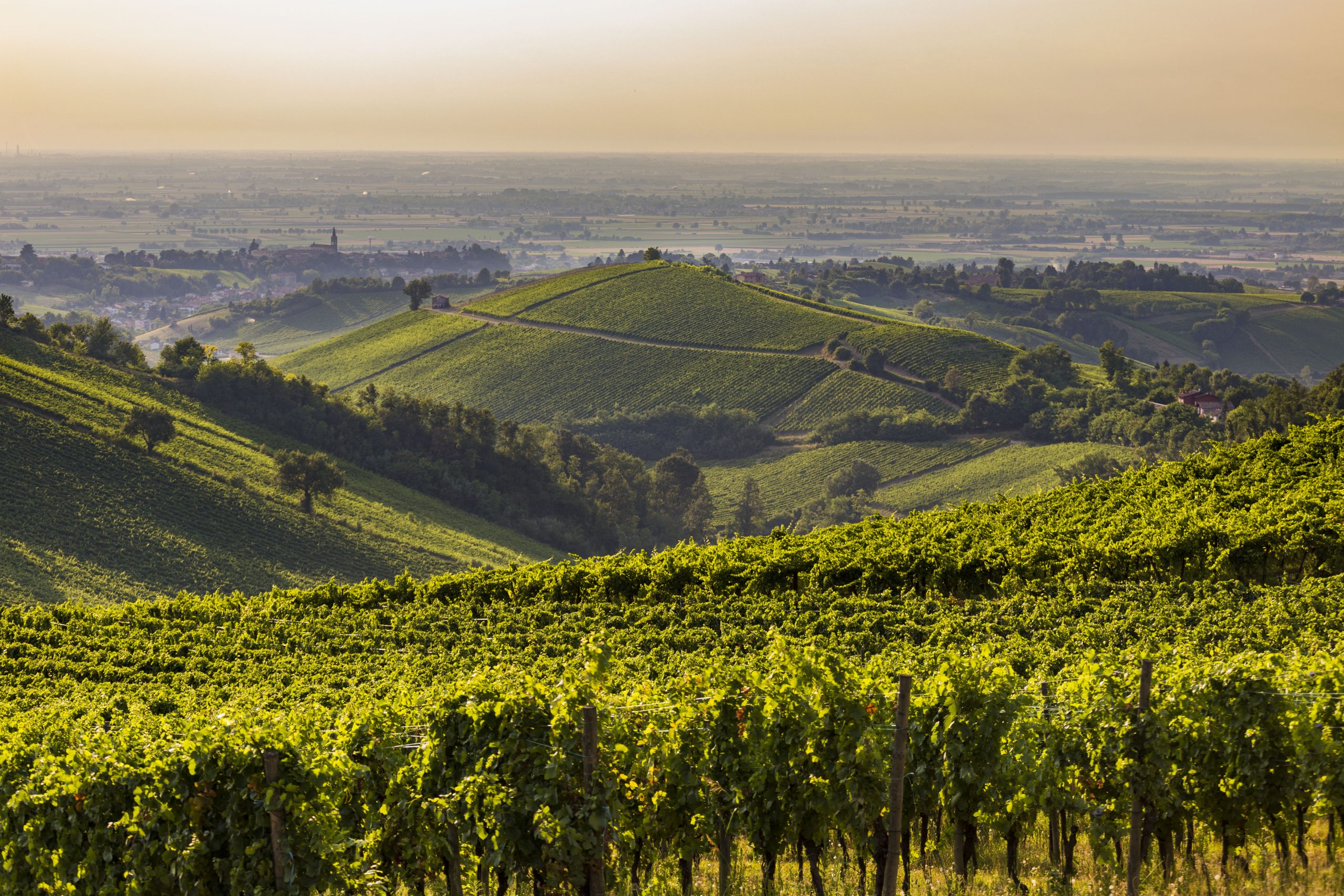
The Oltrepo Pavese, pronounced “ol-tray-po pah-vay-say", translates to “the other side of the Po”, which is the longest river in Italy.  You can find this wine region located about 25 miles outside of Milan.  It’s a very hilly area, compared to Tuscany for its terrain and beauty.  It consists of four valleys which form the shape of grape clusters from south to north including Valle Staffona, Valle Coppa, Valle Scuropasso and Valle Versa. 


There is evidence of vines in this area since 1876 that were discovered in a fossilized vine trunk found near Casteggio.  The Greek philosopher, Strabone, wrote of viticulture in this area as far back as 40 B.C.  Sixty-two percent of the viticulture in Lombardy takes place in the Oltrepo Pavese with over 1,700 wineries covering almost 33,500 acres of land.   

Oltrepo Pavese wine region
Copyright of Consorzio Tutela Vini Oltrepo Pavese

In 1884 this region grew 225+ grapes, but today have narrowed down the focus to 10 grape varietals with Pinot Nero leading the pack along with Barbera, Riesling and Croatina.  There is also a lot of Pinot Grigio grown there as well.  This area is located on the 45th parallel, the same parallel for great Pinot Noir coming from Oregon and Bordeaux.  Pinot Nero has been grown here since the 1800’s and is the 3rd largest area in the world after Champagne and Burgundy.  Croatina is the grape used in the Bonarda DOC found here, but is not the same as the Bonarda grape in Piedmont.  Of course, we’re talking Italian wine so why should it be so easy to understand?! 


When we’re looking at what factors affect the wines grown in a particular region we always look at the climate and geographical influences.  The Oltrepo has Mediterranean influences  comingfrom the Ligurian Sea to the south.  To the west are continental influences that stem from the Po River and the mountains of Piedmont. 

Oltrepo Pavese food and wine
Copyright of Consorzio Tutela Vini Oltrepo Pavese

The Wines 

It’s surprising to see Riesling in Italy, but with Germanic influences in northern Italy it’s no surprise this is where you would find it.  You may see both Riesling Renano and Riesling Italico used, but it’s more common to see the German Riesling Renano used. 


The 2020 La Travaglina Rugiade Riesling Oltrepo Pavese DOC was a brilliant straw color with a beautiful nose of stone fruit and pineapple.  It seemed almost slightly frizzante upon first sip, which seemed to go away, but it had a mouthwatering acidity with crisp, tart, citrus and peach noes that finished with a tingling on the tongue.  Our group had other versions of Riesling with a high amount of petrol commonly found on the palate, but with such diversity in terroir here you get to sample a variety of styles.  La Travaglina started in the 1960’s and is named after the farm that is situated up on the hills of Santa Giuletta occupying over 80 acres of vineyards.  ABV 12.5% 

2020 La Travaglina Rugiade Riesling Oltrepo Pavese DOC

As mentioned previously that the Oltrepo has a long history with both Pinot Grigio in a still or frizzante style that can be used in its own DOC or via the Metodo Classico way. I sampled the 2021 Vanzini Oltrepo Pavese Pinot Grigio DOC. This family has been producing wine since 1890 and owns about 80 acres and utilizes another 80 acres owned by others. Their vineyards are spread aross 5 villages with vineyards that are about 400 meters above sea level. The 2021 Vanzini Pinot Grigio was very pale yellow in color with pretty aromatics of citrus and some tropical fruit. A very straightforward, everyday light-bodied Pinot Grigio that is soft and clean on the palate with apple and citrus notes.  

2021 Vanzini Oltrepo Pavese Pinot Grigio DOC

After a couple whites we’re ending the wine tasting today with a dessert wine. This was a first for me for a wine known as Sangue di Giuda, the blood of Judas.  Legend has it that after Judas’s death he regretted his actions towards Jesus and asked for repentance.  He was resurrected and went to the village of Broni to save some of the vineyards there with a blood sacrifice, which was instructed by a local villager.  Before he could sacrifice himself a force stopped him and the vineyards grew back into being fruitful and so the local villagers named the wine after him.  Quite the graphic story if you ask me! 


Sangue di Giuda is a sweet wine under it’s own DOC that has requirements of 25-65% Barbera, 25-65% Croatina and up to a maximum of 45% of Uva Rara, Ughetta and Pinot Nero.  The 2021 Mon Carul Siliquastro Sangue di Giuda dell’Oltrepo Pavese DOC is made frizzante as a semi-sweet sparkling wine.  With 40% Croatina, 40% Barbera and 20% Uva Rara.  An interesting dessert wine compared to others I have tried.  Ruby in color with purple highlights. It smelled like grape jelly on the nose with some hints of raspberries. Very smooth on the palate with notes of baking spices.   

2021 Mon Carul Siliquastro Sangue di Giuda dell’Oltrepo Pavese DOC
How familiar are you with the wines of the Oltrepo Pavese? 


*These wines were provided as samples, but opinions are always my own.