Friday, April 1, 2022

Slow Wine and Food of Madrevite

It’s been a busy couple weeks and I’m back highlighting Slow Food and Wines of Italy for our theme this month with our Italian Food, Wine and Travel group (#ItalianFWT).  Gwendolyn of Art Predator shared a great overview of what exactly is Slow Wine and Food when it comes to Italian wines. 

Slow Food is an organization that started back in 1986 by Carlo Petrini and other activists with the premise to “defend regional traditions, good food, gastronomic pleasure and a slow pace of life”.  If you’ve ever visited Italy this is one of the things I enjoy the most.  They way many stay true to their traditions and just seem to enjoy the simple pleasures of life.  Some of the best meals of my life have been in Italy over good food, long conversations with friends and family.  The way life should be!

Wine is also incorporated into this mix along with food and Slow Food supports those wineries throughout Italy that are using traditional methods in their winemaking, that also have respect for the environment in which the grapes and protecting the grape varieties themselves.   They also have a guide that was shared with me that features over 2,500 wines from over 300 wineries that pay close attention to quality, value and those that have a high regard for protecting the environment throughout their production. 

The wines I’m sharing today are not featured in the most recent Slow Wine guide, but Madrevite has been featured with one of their other wines.  These samples were shared with me along with a Slow Food package that I cooked up this week.  I chose to focus on the Gamay del Trasimeno grape and wines since this is what Madrevite prides themselves on.

The Winery ~ Madrevite

The Madrevite winery began in 2003 and is comprised of 3 winemaking generations.  The name Madrevite comes from an ancient tool that was used to fasten shut wine barrels.  They selected this name to show the relation between past traditions to the modern world.  The winery is located in the municipal of Castiglione del Lago in the Province of Perugia within Umbria.  It borders closely the Tuscany border and is set in the hills nearby to the Tuscan Lake Chiusi and Umbrian Lake Trasimeno.  Nicola Chiucchiuriotto is the current owner and began the winery after restoring some of his grandfather Zino’s old vineyards dating back to 1978.  Nicola explains him and his family as “farmers by experience, dedication and mission”. 

Madrevite owns close to 150 acres with about 27 dedicated to vines.  The rest of their land consists of forests, olive groves and crops including grains and legumes.  Nicola works with a number of grapes including Grechetto, Trebbiano and others, but Gamay del Trasimeno is the featured grape of the winery.  His aim is to utilize what nature provides while focusing on environmental and economic sustainability.  He has chosen to eliminate herbicides and pesticides along with improving the soil’s fertility and increasing the biodiversity.  Although he is not certified he believes in the “model of life as a movement of conscience rather than certification”.  This is something I personally can appreciate.  As long as a winery is taking the right measures to me a certification isn’t the end all be all.

The Wines

The Gamay del Trasimeno is a grape related to many others and goes by many other names depending on it’s location.  It’s most commonly also known as Garnacha or Grenache, but is also called Tai Rosso in the Veneto and Cannonau in Sardinia.  It is believed that this grape arrived to the area in the 1600’s by Spanish settlers.  Nicole plants his Gamay grapes amid the top of the hill on a small vineyard.  His grandfather Zino planted these in the 70’s by grafting ancient cuttings from 100+ year old vines.

These wines grow with a microclimate of mild winters and warm, breezy summers due to the nearby lakes.  The average year of the vines are around 20 years old and grow on soils based primarily of sand and clay with pebbles throughout. 

I sampled 3 Gamay del Trasimeno wines from Madrevite: 2021 La Bisbetica Rose’, 2020 Opra and their 2019 C’osa Riserva.  My favorite was actually their rose followed by the Opra surprisingly over the riserva.

Madrevite Gamay del Trasimeno wines

The 2021 Madrevite La Bisbetica Rose’ Umbria IGP is made 100% from Gamary del Trasimeno.  The grapes are manually harvested and spend about 6-8 hours in cold maceration before softly pressed, clarified and fermented.  The wine spends 4 months in stainless steel and cement tanks on the lees with another 3 months in the bottle.  Pale salmon in the glass leaning more towards orange.  Floral on the nose with wild strawberries, citrus and yeast.  A mouthwatering acidity lingering throughout the palate.  It’s refreshing mostly with strawberries notes that are crisp with a puckering sour note.  ABV 13%.

The 2020 Madrevite Opra Trasimeno DOC is also made from 100% Gamary del Trasimeno.  Manually harvested with spontaneous fermentation without added yeasts.  The grapes spend 10 months in cement tanks with an additional 3 months in the bottle.  Translucent ruby in color with ripe raspberries on the nose along with toasted marshmallow.  Round, medium bodied with nice acidity and nicely balanced.  ABV 14%

Lastly, the 2019 Madrevite C’Osa Trasimeno DOC Riserva was the final Gamay of the batch made from 100% Gamay del Trasimeno.  Manually harvested 2-3 weeks after the rose.  The grapes spent 6 months in cement with an additional 12 months in big barrel and cement with then 6 months in the bottle.  Translucent ruby in color with sweet berries on the nose with again the toasted marshmallow notes.  A more complex, earthy and a plush wine vs. the Opra with raspberries, blackberries, black pepper with light to moderate tannin.  ABV 15%

Madrevite Slow Food beans paired with Gamay

Madrevite also sent along a package of beans labeled Slow Food, so I thought this was the perfect opportunity to try them out with their wines.  I prepared the beans along with some shrimp topped with some yummy Tuscan extra virgin olive oil from Castello di Brolio.  I should've paired them with the other couple of wines they shared with me including a Grechetto and Trebbiano, but I wanted to sample through these Gamay for today's blog.  They actually paired nicely with the beans.  I'll be attending a virtual tasting with Madrevite on Monday so I may come back and add some more info or share it in a future post.

Slow Food and Wine pairing with Gamay and beans from Madrevite

Join us live on Twitter at #ItalianFWT this Saturday @ 11am EST.  Find more Slow Wine and Slow Food pairings from the following writers:


*These wines were provided as samples, but opinions are always my own.

Friday, March 11, 2022

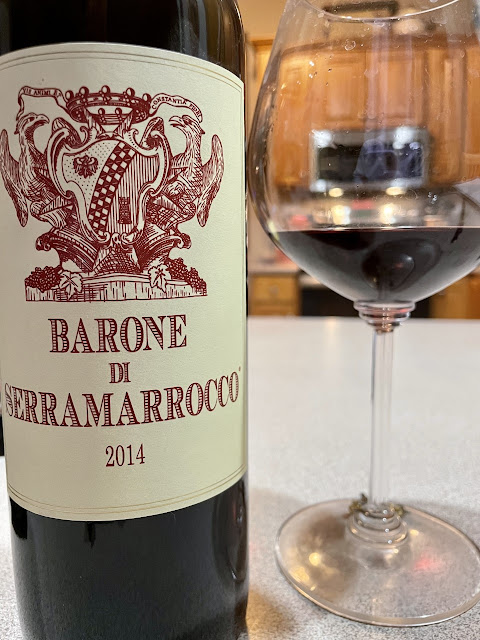
Barone di Serramarrocco Pignatello with Barbequed Ribs

It’s time to feature a grape I’ve taken a liking to since I tried it for the first time a couple years ago, Pignatello.  This month I’m joining the Wine Pairing Weekend (#WinePW) crew again as we explore new varietals hosted by Wendy Klik of “A Day in the Life” blog.  One of the reasons I started Vino Travels, almost 9 years ago next month, was to dig into many of the unknown Italian grapes, like Pignatello.  Italy has so many wonderful native grapes that the average wine consumer has probably never even heard of or had the privilege to try.  Today I hope to change that exploring this native Sicilian varietal. 

The Winery 

The wine that I’m sharing today, a 2014 Barone di Serramarrocco Pignatello, I brought back from my last trip to Italy when I visited Sicily in October 2019. As you can tell I’m long overdue for a visit and for trying this bottle, although I was impressed how many years are probably still left for it to age.  The Barone di Serramarrocco estate was granted to Don Juan Antonio Marrocco whom became the first Baron of Serramarrocco by King Philip IV of Spain due to his selfless acts by providing shelter to many folks in Sicily during the plague.   

The Barone di Serramarrocco winery is located on the western coast of Sicily in the foothills of Mt. Erice on a hillside surrounded by forests.  It is situated about 7 miles from the temple and amphitheatre of Segesta, which is labeled as “one of the most famous archaeological sites in Europe. It occupies about 150 acres with 54 acres dedicates to vines. 

The soils here consist of clay with calcareous sandstone and limestone.  The terroir is protected as the “Vigna di Serra”, which is the first Protected Designation of Origin (PDO) for Erice and the Trapani province.  Their belief is in “high density and a low wine yield”.   

The Grape 

Pignatello is one of the oldest grapes of the Erice DOC wine route and within the Trapani province. It’s more commonly known as Perricone. It is believed the word comes from Sicilian dialect, pignatidare, which are the red soils of the Trapani area that are used for making cooking pots known as pignata. The Pignatello grape grows really well in these soils. It was once widely planted in the late 19th century and used in Marsala Ruby wine until the demand and consumption of these wines decreased and the grape faced possible extinction. Very similar to Grillo, which I featured in my last blog. 

The Wine 

The 2014 Barone di Serramarrocco Pignatello Terre Siciliane IGT is made up of 100% Pignatello from their cru vineyard, Vigna di Sammarcello.  The Vigna di Sammarcello vineyard covers about 9 acres and exclusively planted with Pignatello.  Per the winery’s website, this cru site “produces wines of great structure, long maturity with a complex Mediterranean bouquet and finesse”. 

All the grapes are harvested by hand.  The wine spends 18 months in 500 liter new tonneaux with an additional 10 months spent in the bottle.  this wine was deep, dark garnet in color. An intense, complex nose showing aromas of cassis, herbs, cocoa, baking spices, black cherries and plums. Big, firm tannin right up front on the palate, although I didn’t give it enough time to breathe and this wine needs it. A solid backbone of acidity showing up very dry on the palate with blackberry notes. About 6,600 bottles were produced.  ABV 13.5% I paid only 22.50 Euros for this in Sicily, is quite the steal in my opinion.  

Barone di Serramarrocco Pignatello
I finally got an Instant Pot for Christmas. I feel like I’m the last person to own one, but with little ones sometimes you have to take the easy route. During Super Bowl this year I decided to test it out making some barbequed ribs and then I’m broiled them for a few minutes with some homemade bbq once they were cooked. Simple and easy, but oh so delicious. I was so excited to dig in I forgot to take a more professional picture. I was thankful this barbequed ribs wee able to stand up to the Pignatello since it was such a big wine.  Success! 

BBQ ribs paired with Pignatello

Join the rest of our food and wine loving friends this Saturday on Twitter with #WinePW at 11am EST and discover some new wines and pairings for yourself.  


Friday, March 4, 2022

The Sustainability Behind Sicily's Principi di Butera

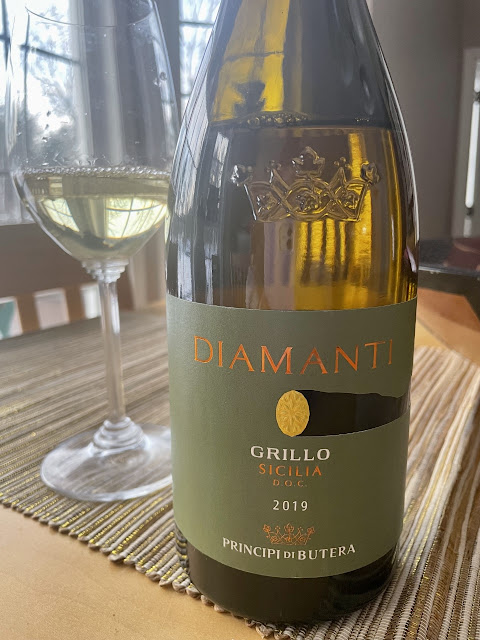
This month our Italian Food, Wine and Travel group (#ItalianFWT) is exploring organic, biodynamic and natural wines hosted by Katarina of Grapevine Adventures.  I'm adding a little flair to it featuring a winery in Sicily, Principi di Butera, that is practicing sustainability.  Since spring is around the corner I'm sharing one of their wines, the 2019 Diamanti Grillo, that has me craving the nicer days ahead as we slowly creep out of New England's winter.

What is sustainability when it comes to winegrowing?  There are a number of different ways a winery can practice sustainability.  It's a way in protecting the environment including the earth and air, conserving water and energy, water management, increasing biodiversity, reducing pesticides and preserving the ecosystem for the future.These practices take place within the vineyards themselves as well as the winery.  In order to be certified, a winery must follow specific criteria and have their farming practices evaluated. 

Does that mean that all sustainable wineries produce wines that are organic or biodynamic?  Not necesssarily.  It can happen, but just because a winery may be certified in one area, for example biodynamic or organic, does not mean that are also sustainable. 

The Winery ~ Principi di Butera 

The Principi di Butera winery surrounds an ancient courtyard that belonged to the 1st Prince of Sicily, Prince of Butera, Ambrogio Branciforte.  It was bestowed to him by King Philip II of Spain  in 1543.  The estate is located in the Caltanisetta province located in the southeast part of Sicily just 2 hours outside the capital of Sicily, Palermo.  

The area and it's soils are loaded with minerals and are mostly limsteone with clay.  It is set only about 6 miles from the Mediterranean coastline so they experience the hot, dry sun along with sea breezes with great diurnal swings allowing for ideal grape growing.  The estate occupies almost 800 acres with 420 acres dedicated to vines running east to west.

Here are some ways in which Principi di Butera practices sustainability:

  • Use of green manure, the process of burying specific crops to increase the fertility of the soil
  • The fertilizers used are organic
  • Weeding does not take place
  • They use a defense method to protect the spread of parasites in the vineyards
  • Preserves local flora and fauna by maintaining around 120 acres of farming land and pastures along with about 60 acres of olive groves that are all organic.
  • Use of a rainwater collection system when irrigation is necessary

The winery was acquired in 1997 and is know owned and operated by the well known Zonin brand.

The Wine

The wine I'm sharing today is based on the Grillo grape.  Although it can be find throughout Italy, Grillo calls Sicily home.  It is a cross between the Catarratto and Zibibbo (also known as Musut di Alexandria) grapes.  It was a grape that once faced extinction.  It was widely used in the production of Marsala until it hit a decline in the 60's and was being replaced by more productive grapes.  Thirty or so years later it was revived as a dry wine.  

2019 Feudo Principi di Butera Diamanti Grillo Sicilia DOC
The 2019 Feudo Principi di Butera Diamanti Grillo Sicilia DOC is made from 100% Grillo.  It's fermented in stainless steel and spends about 4-6 months on the lees with a few more months in the bottle.  If you dig Sauvignon Blanc like I do you will want to give this wine a try.  A very pale straw color in the glass with a hue of green.  A fragrant nose of citrus and pineapple with a hint of pear.  Mouthwatering acidity through the palate with mostly citrus and apple notes.  On the back palate I also got a slight creaminess and hint of vanilla, possibly from the lees. Salinity showing up and rounding out the finish.  Just a lovely, easy drinking and refreshing wine.  ABV 12.5% SRP $16.99 

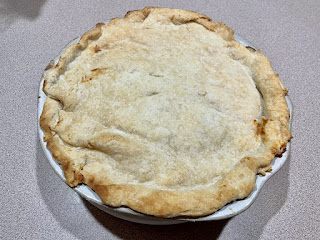
I cheated this week and picked up a roast chicken, but brought it home to chop up to make a homemade chicken pot pie to pair with this wine.  Delish!

Join our #ItalianFWT group live on Twitter this Saturday @ 11am EST as we chat about Italian organic and natural wines.  Read on for some more Italian food and wine suggestions.

Nicole at Somm’s Table will share “Cavalleri Franciacorta with Braised Collard Greens and Polenta”

Wendy at A Day in the Life on the Farm will share “Discovering Ziobaffa Wines”.

Camilla at Culinary Adventures with Cam will share “With an Ethos of Quality and Sustainability: ZIOBAFFA Pinot Grigio Terre Siciliane IGT + Braised Celery Over Farro Couscous

Susannah at Avvinare will share “Tuscany’s Querciabella Leads the Way on Vegan Wines

Gwendolyn at Wine Predator will share “La Maliosa Saturnia Biodynamic Natural Wine: Red, White Native Grapes Paired with Pizza #ItalianFWT

Katarina at Grapevine Adventures will share “3 Wines Going From Organic To Natural”


*This wine was provided as a sample, but opinions are always my own.