Friday, June 10, 2022

National Prosecco Week Kicks off with Fratelli Cosmo Col Fondo Prosecco

 Tomorrow is the start of National Prosecco week and I always have something in stash to share with you all. Today I’m sharing a bottle of the non-vintage Fratelli Cosmo Cosi E Col Fondo Conegliano Valdobbiadene Prosecco DOCG. There is your average mass market Prosecco and then there are those deemed of higher quality from some of the respected appellations like those from Conegliano Valdobbiadene and Asolo.  

This Fratelli Cosmo Prosecco is one of the products of the Bellenda winery I’ve covered before. I couldn’t locate exactly what the association is with Fratelli Cosmo and why the wine is named that. What I thought would be interesting to share about this wine is the Col Fondo part of the name listed on the bottle and exactly what that means. 


What is Col Fondo? 

Here is where your Italian will come in handy if you have some knowledge of Italian grammar. The Italian preposition con, meaning with, and the definite article il, meaning the, are combined to form the word “col”. Fondo translates to bottom, so col fondo equates to “with the bottom”. What does this mean for the wine? Well, there are different methods in which Prosecco can be produced including the most common being the Martinotti or Charmat method that we’ve discussed before. Col Fondo differs from the other Prosecco producing methods because it goes through a secondary fermentation where it doesn’t go through disgorgement. The sediment, or lees, are not removed from the bottle and are left to stay in the bottle or “on the bottom” as the name refers.  


You will find Col Fondo only in the production of Prosecco and not all bottles will have it on the label. You may see “rifermentato in bottiglia” that it was refermented in the bottle. Since this is a more natural way to produce Prosecco without the wine being filtered the wine may look cloudy in the glass. They are produced in a frizzante style that have less bubbles than others and will tend to be drier. They also may tend to taste sour or bitter, but not in a negative fashion as you may assume. 


The Wine 

The Bellenda Fratelli Cosmo NV Cosi E Col Fondo Conegliano Valdobbiadene DOCG is grown on south and southwest facing slopes on limestone and clay soils with remains of ancient glaciers. The wine was cloudy as expected with a tinge of yellow-greenish color. A soft nose of apples and white peach. Very dry with rather delicate bubbles with notes of apple and lime. Great acidity with minerality showing throughout. ABV 11% SRP $16-20 
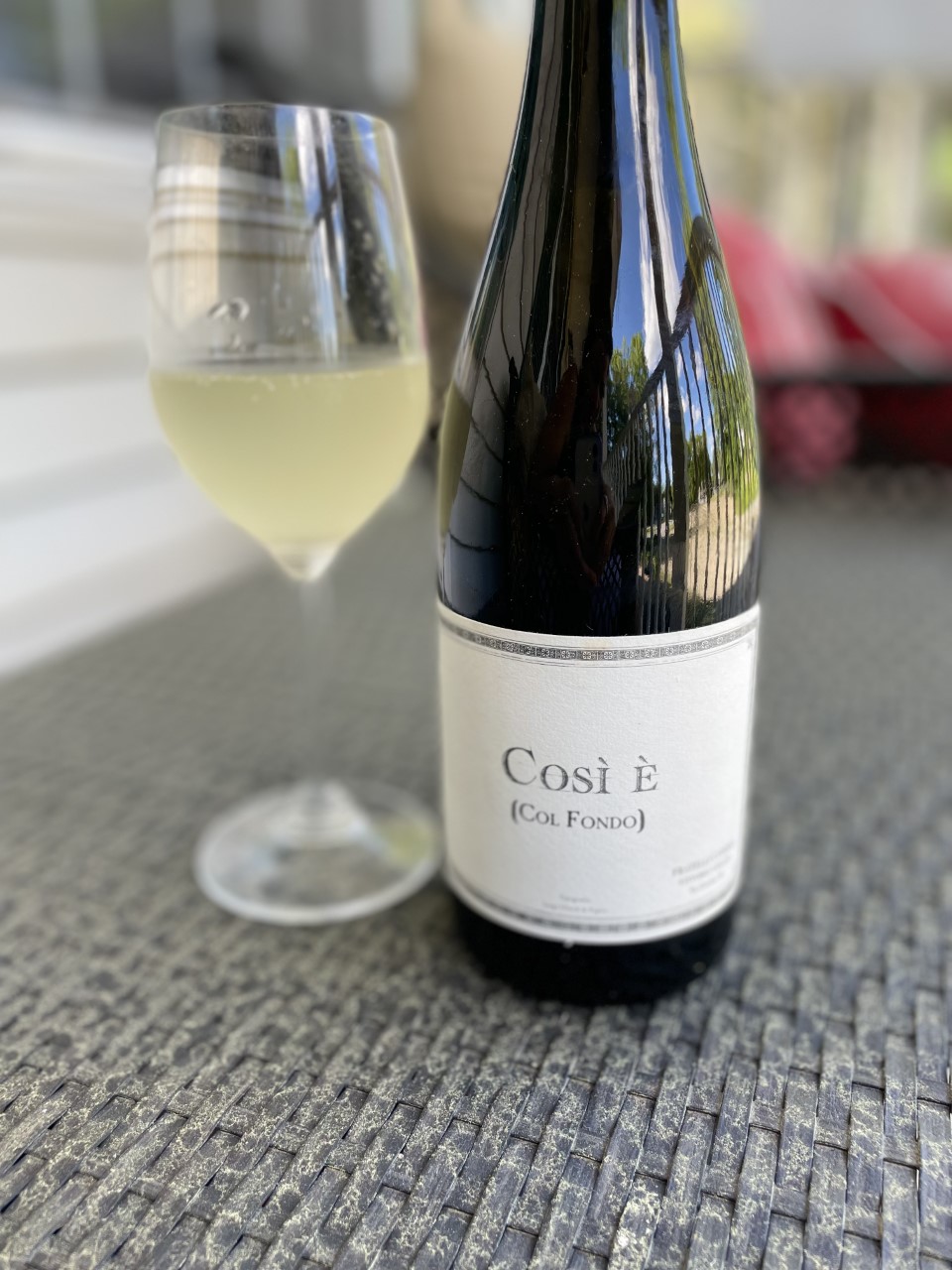
Bellenda Fratelli Cosmo NV Cosi E Col Fondo Conegliano Valdobbiadene DOCG

The Pairing 

I’ve been increasing my seafood and white meat in my diet over red meat and have for a long time wanted to prepare fish cakes. After tasting this wine this week I knew it was time to try them out. This wine seems like it gravitates well to seafood so it seemed like a natural pairing. Although wine is always hard to pair with asparagus I focused on tasting it with the fish cakes instead and it was quite the delight! 

Fish cakes with Prosecco

Check out some of my older postings on some of the Prosecco appellations of northern Italy. 

*This wine was provided as a sample, but opinions are always my own.

Friday, June 3, 2022

The Indigenous Whites of Campania with La Capranera Falanghina

When it comes to indigenous white grapes of Italy there is such a large variety to chooe from.  This month our Italian Food, Wine and Travel group (#ItalianFWT) hosted by Marcia at Joy of Wine selected the theme of indigenous white grapes from all over Italy.  I’ve had a bottle of Falanghina from the Campania region that I haven’t tried yet that I’ll be sharing today.  I love this region for both their whites and reds and don’t try them enough.  Let’s dig in! 


The Region ~ Campania 

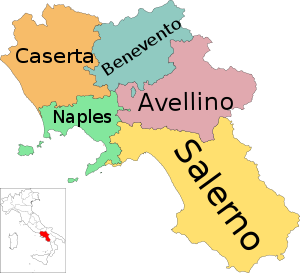
The Campania wine region is located in southern Italy on the western border of the Tryyhenian Sea, which has a large influence on the wines of this region.  The wine I’m sharing today comes from the San Salvatore estate founded in 1988 by Giuseppe Pagano with the famous Riccardo Cotarella as his winemaker.  He grows indigenous grapes of Campania including Falanghina, Fiano and Aglianico on his 55 acres of vineyards.  The larger population of his 270+ acre estate is covered by forests with some arable farmland and olive groves. 

Campania region map
The Campania Region ~ Copyright of Wikipedia

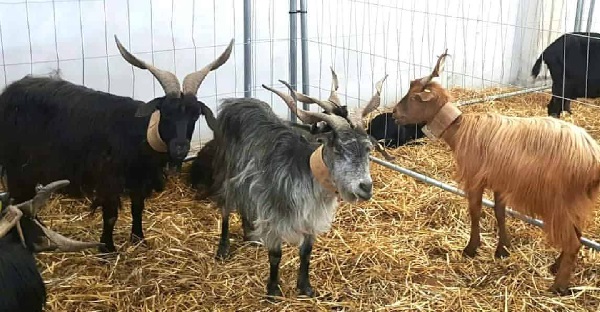
La Capranera is a project that he started that produces young wines that are certified organic following biodynamic methods that are modern and easy to drink at affordable pricing.  The name “La Capranera” means “black goats” and stems comes from the indigenous goats the area called cilentana nera.  These goats graze in the nearby Cilento National Park outside of where the grapes are grown in the Capaccio-Paestum area.  These goats at one point faced extinction and are now are a growing population along with the Falanghina grape that once fell to the wasteside and is steadily being revived. 

cilentana nera goats of Campania
Cilentana Nera goats ~ Copyright of Pasquale D'Ancicco
The Grape ~ Falanghina 

Falanghina, pronounced “fah-lan-ghee-nah", is an ancient grape believed to be of Greek origin.  It’s primarily to be found in the Campania region and may be seen in small amounts in the regions of Puglia and Abruzzo.  It loves the volcanic soils of Campania placed from Mt. Vesuvius.  These grapes are yellow in color and are covered in a thin, waxy coating.  They’re typically are lively with acidity and floral aromatics with flavors of citrus, apple and pear with possible spicy and mineral notes along with pine aromas.  The wines may be labeled as Falanghina, but could be possibly be made from a combination of two genetically distinct grapes, Falanghina Beneventana and Falanghina Flegrea.  The only way to really know this is by doing your research after purchasing, but either way you’ll still be able to experience what this wonderful grape is all about. 


The Wine 

I wasn’t able to locate any technical specs on this particular vintage.  The winery only had their 2016 on their site so I don’t have those specifics to share.  The 2018 La Capranera Falanghina was straw colored with lots going on in the nose. Aromas of pears, green apple, lemon and a hint of peach. Mouthwatering acidity greeted me up front and carried right through to the lingering finish. Pineapple notes along with some lemon pith and salinity played on the palate. ABV 12.5% SRP $15  

2018 La Capranera Falanghina

This week was hectic with the holiday so I prepared some shredded chicken in the crockpot with carrots and peas with a side of asparagus. To please the husband and the kids I topped it with a roux sauce. It basically tasted like chicken pot pie without the pie. It went pleasantly well with the Falanghina. Not a Campanian dish, but sometimes you have to work with what you got and life is still good.  

chicken pairing with Falanghina
What are your favorite white native grapes of Italy that you enjoy?


Join the rest of our Italian food and wine loving friends as they share other indigenous Italian whites with some suggested pairings. Join us live this Saturday on Twitter at #ItalianFWT @ 11am EST. Ci vediamo! 

Importer: Banville Wine Merchants

Friday, May 20, 2022

Celebrating Oregon Wine Month with White Cabernet Franc from Leah Jorgensen

May is Oregon Wine Month and I missed sharing these wines today for Cabernet Franc Day so I figured this would be the perfect opportunity to highlight the wines of Leah Jorgensen.  I've always been a fan of Cabernet Franc from when I first began enjoying wine from my visits to the Finger Lakes in Upstate New York.  I must admit I need to learn more about French wines as I’m sure they have many gems when it comes to Cabernet Franc as well.  I always have enjoyed Pinot Noir from Oregon, but was pleased to receive some wines from Leah Jorgensen and to discover that Cabernet Franc is her pride and joy.  She even makes a Blanc de Cabernet Franc!  Yes, you heard that right, a white Cabernet Franc! 

The Winery ~ Leah Jorgensen 

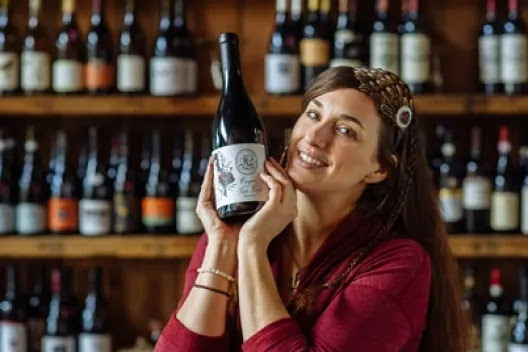
Leah Jorgensen Jean, owner and winemaker of Leah Jorgensen Cellars, has always had agriculture and winemaking in her blood. She grew up on a small farm near Eugene, OR and has Italian heritage from her mother’s family whom has been making wine in Italy since the 1700’s.  Her goal is to eventually buy back the land from the farm she grew up on, plant vines and name them after her grandparents.  

Leah Jorgensen Cellars
Copyright of Leah Jorgensen Cellars
She began her wine career in Washington DC at a wine shop before moving on to work for a Virginian winery, Chrysalis Vineyard.   She then moved on to working for a distributor before relocating to the Oregon wine scene in 2004.  She studied enology for 2 years at the North West Viticulture Center in Salem and moved on to work for a number of wineries there including Erath Vineyards, St. Michelle Wine Estates, Anne Amie Vineyards and Adelsheim Vineyards to name a few.  

In venturing off to produce her own wines her pride and joy is Cabernet Franc. She prefers to make these wines in the Loire style from her influence of the days of when she worked for Louis Dressner Selections. She partners and works closely with a number of farmers that are organic, LIVE certified and Salmon Safe. The grapes are all hand harvested and she sources grapes from the Willamette Valley and Southern Oregon.  


The Wine 

I have to say this was the first white Cabernet Franc I had ever seen and I was digging it. Leah was the first commercial producer of still Cabernet Franc back in 2011. She wanted to “do something different and turn heads” and that it does!

2020 Leah Jorgensen Mae’s Vineyard Blanc de Cabernet Franc

The 2020 Leah Jorgensen Mae’s Vineyard Blanc de Cabernet Franc is made from 100% Cabernet Franc grapes from Applegate Valley in Oregon.  The wine was a glimmering light golden color with a tinge of pink.  Quite aromatic with aromas of wild strawberries, stone fruit with a hint of lemon citrus.  Crisp, clean and refreshing on the palate with citrus notes including blood oranges.  A wine with good body with the flavors and a tingling acidity lasting through to the finish.  Leah suggests pairing this wine with seafood dishes as the bright acidity in the wine pair well the dishes.  ABV 13% SRP $30 


What are your thoughts on Cabernet Franc and where do some of your favorite grow? 


*This wine was provided as a sample, but opinions are always my own.