Friday, September 2, 2022

Cannonau and the Nuraghe of Sardinia with Surrau

Sardinia is Italy’s 2nd largest island located off the western coast of Italy separated by the Tyrhhenian Sea.  Today our Italian Food, Wine & Travel group (#ItalianFWT) is led by Jill Barth of L’Occasion as we highlight the wines and food of Sardinia, called Sardegna in Italian.   


Sardinia is one of the few regions I have yet to explore in Italy and I’m not sure why.  It has a rugged, mountainous interior with forests and scrub covered land.   It also has about 1,200 miles of coastline, some jagged, but the rest with beautiful beaches and blue-greenish crystal waters.  Some years ago I attended a wine tasting and luncheon hosted by Susannah of this group and Vigne Surrau.  I had the chance to taste through a number of their wines and meet the owner Martino Demuro alongside some pairings at a Boston restaurant.  I recently picked up a bottle I wasn’t familiar with of theirs, a 2020 Surrau Naracu Cannonau di Sardegna DOC, so I’ll be sharingthat today along with some more information on Vigne Surrau. 


The Winery ~ Vigne Surrau 

Vigne Surrau was established back in 2001 by the Demuro family whom are native Sardinians.  One of the twelve siblings, Tino, purchased vineyards in Arzachena at that time and began producing wines. They own 148 acres across 8 different locations in the northeastern corner of Sardinia.   The winery is named after the Surrau Valley in which it is located between the comunes of Palau and Arzachena, which is located right in the heart of Gallura.  The Gallura area of Sardinia is well known for its Vermentino, which is the only DOCG in Sardinia.  Vigne Surrau’s production is 70% made of Vermentino since this area shows the best expression of this grape on the island.  They are also only a 15 minute drive from the Emerald Coast, or the Costa Smeralda. 

Gallura wine area of Sardinia
Copyright of Vigne Surrau

The Wine  

The 2020 Surrau Naracu Cannonau di Sardegna DOC is made up of 100% Cannonau.  Under the Cannonau di Sardegna DOC the wines must have a minimum of 90% Cannonau with up to 10% of local red grapes. Cannonau is also known as Grenache in France and Alicante or Garnacha in Spain.  It is the primary red grape of Sardinia that is high in antioxidants including polyphenols and anthocyanins.  It may be part of the reason the Sardinian population has a life span of 90-100 years old.  Sunshine, great food and wine rich in antioxidants! 

2020 Surrau Naracu Cannonau di Sardegna DOC

Surrau’s Naracu, is named after the Nuraghe, which are ancient stone fortresses that are found all throughout the island.  The vines are located in sandy soils of granite origin, typical of this part of Sardinia.  The wine spends 6 months in stainless steel with an additional 3 months in the bottle. The wine was ruby in color with some transparency. The aromas reminded of a combination of raspberry and blueberry jam with a hint of spice. A dry, medium-bodied with moderate tannins. Juicy blackberries filled the palate with a hint of sweet tobacco that lingered on with a lengthy finish ending with finesse.  
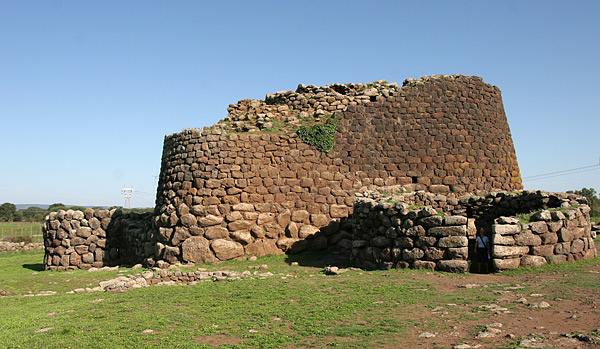
Nuraghe of Sardinia
The Nuraghe - sourced by Wikipedia copyright of Jack Aubrey

It’s been a crazy few weeks with the kids going back to school, sports starting and my normal routine all a fluster. I wanted to pair this wine with a Sardinian dish, but time and planning has been lacking these days. Although, there wasn’t anything wrong with my chosen dish of a Tuscan chicken and pasta dish with sundried tomatoes. I meant to throw in spinach, but realized I forgot to pick it up so I did throw in a side of fresh green beans with this lovely oil I so graciously received from my trip to Firriato in Sicily.  

Cannonau wine pairing with Tuscan chicken

What are your personal Sardinian favorite wines or dishes? 

Join our fellow Italian food and wine friends as they share their Sardinian wines and food pairings.  Catch us live on Twitter this Saturday at 11am EST @ #ItalianFWT.  See you there! Ci vediamo!

  • Culurgiones (Sardinian Pasta Dumplings) + Pala i Fiori Cannonau 2019 published by Culinary Adventures with Camilla 
  • Wine and Cheese Delivery! Quartomoro Orriu Cannonau di Sardegna and a Cheese Board from Curdbox #ItalianFWT from Wine Predator
  • Vermentino from Sardinia – Sunlight in a glass over at Crushed Grape Chronicles 
  • Mamoiada: When a Wine Area Finds A New Fresh Voice by Grapevine Adventures
  • Zuppa Gallurese and a Cannonau di Sardegna over at A Day in the Life on the Farm
  • Learn about the Italian island wine that has been called 'Sardinian Sherry’ in a republication of Rare Wines From Sardinia And Sicily Are Complex And Historic here on l’occasion

  • Friday, August 5, 2022

    Blending the Non-Native Grapes of Puglia with the Trentatre Rosso

    Italy has a rich history of winemaking dating back thousands of years with hundreds of grape varietals founds throughout all 20 regions of Italy.  One of the many reasons I love Italian wine is the wide abundance of native, indigenous varietals found throughout the country.  Last weekend I visited a wine shop as I was passing through south of Boston for a party and I felt like a kid in a candy shop with their wide array of Italian wines that most have probably never heard of.  This is what I love about Italian wine!  Such variety and character with a depth of history behind these wines that demonstrate their deep roots in the Italian wine industry. 

    This month Martin of Enofylz Wine Blog is hosting our Italian Food, Wine and Travel group (#ItalianFWT) and chose our theme of non-native varietals.  Although Italy’s indigenous grapes are gaining recognition and attention of the masses, it is always fun to explore the international varieties and their role and presence in Italian wine. 


    When we talk about international grapes in Italian wine most are French grapes including Chardonnay, Sauvignon Blanc, Cabernet Sauvignon, Cabernet Franc and Merlot.  Throughout time international grapes have had a presence in Italian wine whether vine cuttings were brought over from other countries by personal selection or invasions.  Phylloxera, the vine disease that hit in the late 19th century, also has played a role in changing the Italian wine landscape and during this time some wineries chose quantity and higher yielding grapes over quality than preserving Italy’s native grapes.  This was the time that many of these obscure, rare native grapes faced extinction.   


    Thankfully, some Italian wineries and winemakers over recent decades have focused on bringing some of these ancient varietals back to life.  In addition, with the creation of Consorzio and the DOC and DOCG designations, this has helped to focus on quality and to demonstrate the special terroir along with preserving the traditions of many winemaking regions throughout Italy and help promote the history behind many of these Italian wine appellations.  

    You can find international varieties all throughout Italy. Merlot is actually one of Italy’s mostly highly planted grapes. Chardonnay can be found in the sparkling wines of Italy in the Franciacorta wine appellation. I’ve found many single varietals produced in northern Italy of grapes likes Sauvignon Blanc or Cabernet Franc. Then there are many international grapes that are blended in with native grapes including the wine I’m sharing with you today. For example, many of you are familiar with the so-called “super tuscans” that are blends with these grapes like merlot or cabernet.  


    A recent visit to Trader Joe’s had me scoping out their Italian section to see what unique wines I could find or just something different. I came across a 2020 Trentatre Rosso blend that was 33.3% Cabernet Sauvignon, 33.3% Merlot and 33.4% Montepulciano. As the name states, trentatre, means thirty-three that makes up the blend of these 3 grapes. At $5.99 I figured it was worth a shot to sample for this event. Come to find out upon research that this tends to be a well-liked wine upon other wine reviewers in previous vintages, but trying this for the first time I had nothing to compare it to. 

    Trader Joe's 2020 Trentatre Rosso

    The 2020 Trentatre Rosso Salento IGT wine comes from the Puglia, aka Apulia, region in southern Italy located on the heel of the boot. This wine was aged 6 months in oak. I couldn’t locate much to give some background on the winery or how it was produced unfortunately. This wine was deeply ruby colored and had a rich nose of black cherry with notes of chocolate lingering. A hefty medium-bodied wine with some surprising firm tannin up front matched with good acidity and rich flavors of red and black fruits including plums, raspberries and blackberries. For the price I paid I don’t see how one cannot enjoy this wine, but I would grab some BBQ. That is all I thought of upon sipping this wine.  ABV 14%


    Join the rest of our Italian food and wine lovers as they share their selections on Italy's non-native grapes. Catch us live on Twitter this Saturday at 11am EST @ #ItalianFWT. Buon weekend!


    • Camilla of Culinary Adventures with Camilla will be whipping up Deviled Eggs and a Chardonnay from Alto Adige
    • Lynn of Savor the Harvest will be sharing The ‘Other’ Wine Grapes in Italy 
    • Linda of My Full Wine Glass will be offering us Trentino: Another option for Pinot Noir fans
    • Susannah of Avvinare will be contributing Oltrepo’ Pavese – Pinot Noir Reaches New Heights
    • Deanna of Wineivore will be dishing up Butternut Squash Risotto Paired with Organic Merlot
    • Gwendolyn of the Wine Predator will be exploring Chardonnay Blanc de Blanc: Ivaldi’s Andrea Alta Langa DOCG #ItalianFWT
    • Wendy of A Day in the Life on the Farm wonders An Italian Merlot? Sì, Grazie
    • I’ll be sharing Mussels With Garlic and Parsley Paired with Cantina Terlan Kreuth Chardonnay

    Friday, July 22, 2022

    The Uniqueness, Challenges and Future of Mt. Etna Wines

    I’m always intrigued by volcanic wines no matter where they are grown.  There is something so unique about wines growing on either ancient volcanic soil or even active volcanos like Mt. Etna where the soil composition is ever changing. I was reminded of how fascinating the wines of Mt. Etna in Sicily are once again when I attended a live webinar this week hosted by the Napa Wine School with Ben Spencer sharing his expertise on what makes these wines so special.  You may remember I featured Ben Spencer and his book “The New Wines of Mount Etna” in the past that you can revisit below.  Today I wanted to highlight even more that I learned about the wines of Mt. Etna and some interesting facts. 

    Sicily is the 4th largest region in terms of quantity of wine production in Italy.  It’s the largest island in Italy with a Mediterranean climate hosting warm and dry summers following by mild and wet winters.  Mt. Etna is located on the northeast side of the island and is a 900-foot volcano with the Ionian Sea off the east coast.  This area receives a few different mistral winds that sweep across the sea that influence winemaking on Etna.  There is the ponente winds that provide humid, by dry air coming from the west.  Coming in off the Ionian Sea is the grecale winds that are more cooling.  From the south reaching up from Africa are the scirocco winds that are sandy that bring in humidity that can leave behind dust that can affect the leaves on the vines, therefore also affecting photosynthesis. 


    Mt. Etna not only faces the challenges of climate including the winds, but this region also receives up to 75 inches of rain, which can potentially also bring fungus, mold and rot.  As one can imagine the steep slopes where the vineyards are planted so the tedious labor of manual harvest is required as well.  Irrigation is not allowed so the vines must search deep below the surface. 


    The soils of Mt. Etna are composed of 35 different soils including basalt, sand, pumice, glass, metal, etc.  With Etna being an active volcano, these soils do change throughout the years as Etna releases what they call as parent material that comes from the magna chamber deep below the surface.  This parent material can deposit up to 1,000 pounds per year on the surface of what already exists.  This is part of the reason why these wines are ever changing even including the flora that varies year to year with a variety of different plants from the ever-changing soils.   

    Soils of Mt. Etna

    Wrapping up our webinar Ben shared what may be possible for the future of Mt. Etna wines.  Currently the region is only farming about 2,700 acres with a production of 4 million bottles, but there are almost 57,000 acres available to be utilized within the DOC.  He also mentioned that possibly within the next 10 years you may see an Etna DOCG.  This will be an interesting wine region to watch develop in the coming years.  Italy has such rich history, but also so much to go when it comes to Italian wine.   


    Of course, learning isn’t complete without being able to taste some wines. Although I didn’t get the wines that they were sampling in the tasting I did open a bottle I had on hand, a 2018 Firriato Le Sabbie Dell’Etna Etna Rosso DOC. I was making some baked ziti for the family and figured this would be an enjoyable pairing. This wine is made from 80% Nerello Mascalese and 20% Nerello Cappuccio. Nerello Mascalese is the primary red grape of the Etna Rosso DOC wines. It is an offspring of Sangiovese and a white grape of Calabria, Mantonico Bianco. Up to 20% Nerello Cappuccio is allowed in the Etna Rosso DOC wines as used in this blend. Red wines also make up 55% of the Etna DOC wine production. 

    2018 Firriato Le Sabbie Dell'Etna Etna Rosso DOC
    Baked Fusilli with Etna Rosso pairing

    The 2018 Firriato Le Sabbie Dell’Etna Etna Rosso DOC was lighter ruby color with brick tinges in the glass with a rich bouquet of red fruit aromas that remind me of cherry chapstick with notes of black pepper and cinnamon. Juicy red berries continue onto the palate with lively acidity. Elegant tannins carry through to a harmonious finish. SRP $20-25 ABV 13.5% 


    To check out my other articles on Mt. Etna wines including my visit to the Firriato estate in Sicily follow along: