Friday, October 21, 2022

Here and Now with Hic et Nunc Wines of Monferrato

Last month I attended a virtual tasting of the wines from Hic et Nunc located in the Piedmont region of northwestern Italy.  The winery is based in Casale Monferrato, which is about 20 minutes outside of Asti and Alessandro based in the Alessandria province.  The winery is located on the lower part of Monferrato, known as Basso Monferrato, that is located on the 45th parallel, a synonmous latitude with some of the greatest wines of the world.  I was intrigued by the origins of the name Hic et Nunc since it seemed unusual for an Italian winery.  The name originates from Latin that stands for “here and now”.  The here represents the chosen area of Monferrato to grow the wines where the vision is for the “pursuit of authentic purity of aromas and sensorial notes” and there is no better time than the present, “the now”.    
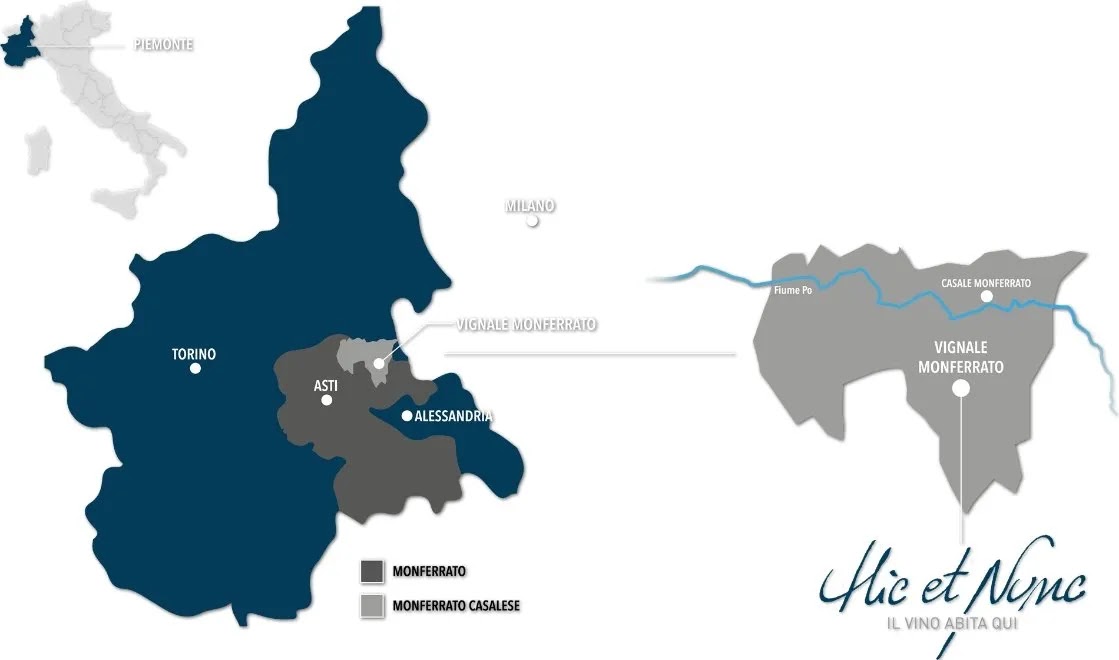
Hic et Nunc wines of Piedmont
Copyright of Hic et Nunc

The Winery ~ Hic et Nunc 

In 2012 the Rosolen family, originally from the Friuli region, bought the estate from Giovanni Ratibondi, the winemaker that owned a larger portion of the vineyards.  Giovanni remained onboard following the purchase to care for the vineyards.  In 2015, Mario Rosolen and his son Massimo, whom is now the President, started producing wines under the Hic et Nunc brand with Cristiano Garella as the winemaker as of 2021. 


Hic et Nunc focuses on only local varieties with a focus on single grape varieties including Barbera del Monferrato, Barbera d’Asti, Grignolino and Cortese.  The estate is located on about 250 acres of land with 50 acres dedicated to vines totaling a production of about 150,000-160,000 bottles annually.  Some of the Barbera vines are over 80+ years old!  They believe in making sure the grapes reach full maturation with long maceration times and the juice fermenting in stainless steels tanks with minimal use of wood and when used only using tonneaux.  The goal is to make artisanal wines in which they “look for finesse, amaze for its drinkability, the richness of the fruit and complexity of the aromas”.   


The soils of the Monferrato vineyards are on ancient sea beds from the Jurassic era consisting of white calcareous soils that produce wines that are aromatic and floral including their Cortese and Grignolino are red clay where their Barbera and Dolcetto are grown.  The climate of this area used to be cold with a good amount of rain, but the climate has been changing to a drier climate with higher temperatures with the 2017, 2018 and 2022 being some of the warmest vintages.   

Vineyards of Hic et Nunc wines
Copyright of Hic et Nunc

The Wines 

The 2019 Hic et Nunc Dolcetto Mondano Monferrato DOC is one of the few Dolcettos being made in Monferrato they mentioned during the tasting.  These grapes are hand-picked from a single vineyard in Bricco, the highest vineyard on the estate at 400 meters above sea level with southern exposure and white tuff soils.  This wine spends 12 days in maceration and ages 8 months in stainless steel.  It was a deeper ruby color with aromas of a blackberry, blueberry jam.  Full-bodied with gripping tannins up front that were greeted by juicy blackberries and current notes.  ABV 14% 15 euro
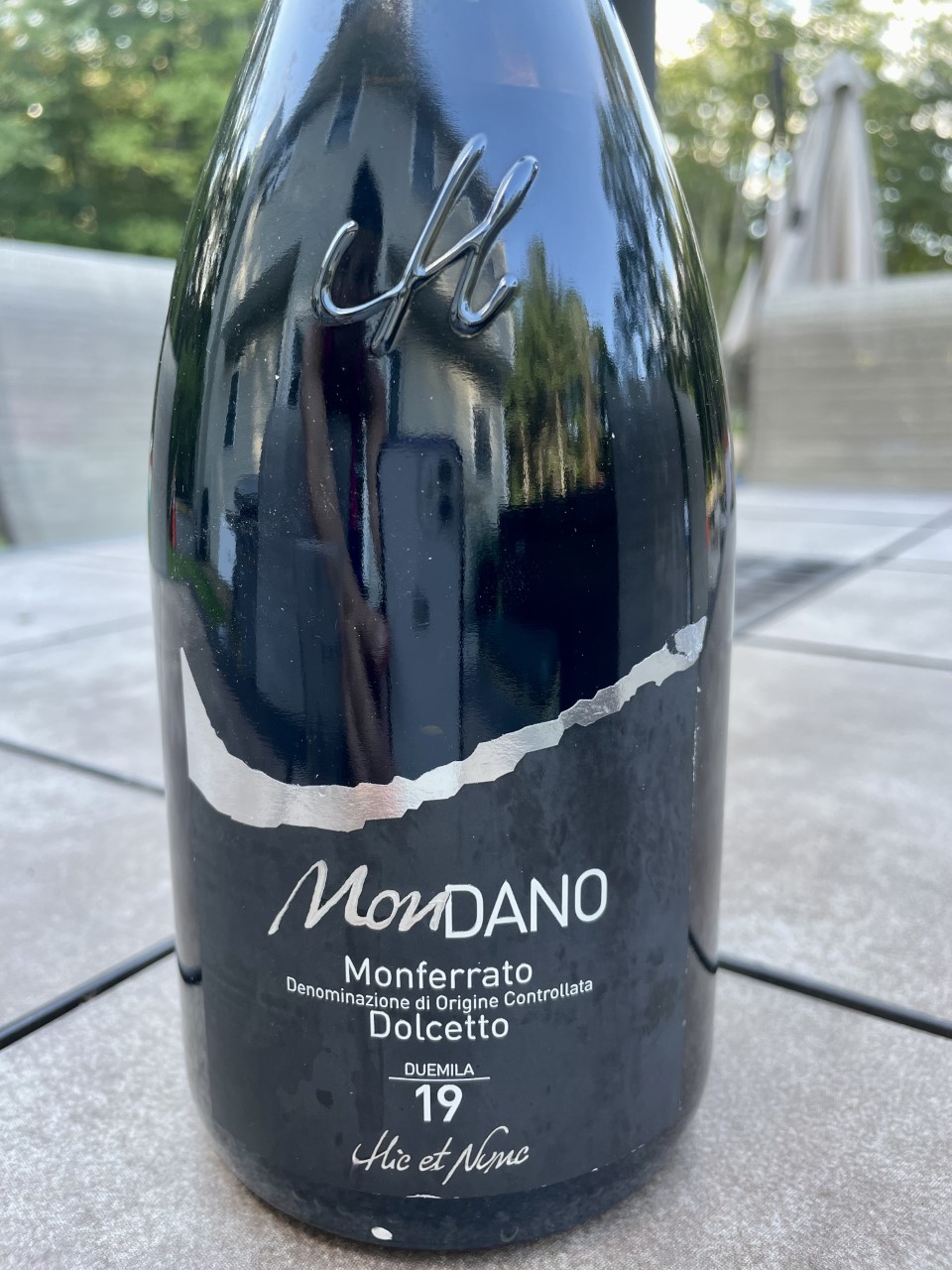
Hic et Nunc Dolcetto

The 2021 Hic et Nunc Monolite Cortese Piemonte DOC is grown from 35-40 year old vines.  Even though it was my preferred style, it’s important to learn about the white grapes of Piedmont, in this case Cortese.  Cortese is a grape known for it’s high acidity, which was prevalent in this bottle.  It’s typically a grape made in bulk or has been replaced by Chardonnay.  This wine spent 90% in stainless steel with 10% in barrique without fining or filtering for freshness.  ABV 14%.   21 Euro

Hic et Nunc Cortese

I loved comparing their two Barbera wines with two very different styles. The more fresh, juicy 2018 Hic et Nunc Femminile Singolare Barbera del Monferrato and the more structured, fuller bodied 2018 Hic et Nunc Monumento Barbera del Monferrato Superiore.  


The 2018 Hic et Nunc Femminile Singolare Barbera del Monferrato DOC is made from 100% Barbera hand-harvested from 3 vineyards sites close to the winery. The grapes are grown in a mixture of soils to include red clay, limestone and white marl. This wine is not fined or filtered and spends 15 days in maceration with 12 months in stainless steel only. Deep ruby in color with garnet hues. Aromas of freshly crushed blackberries, cherry and black cherry with baking spice notes. Medium-bodied with lively acidity with juicy black fruits that were persistent throughout. ABV 14% 16 euro 


In comparison is the 2018 Hic et Nunc Monumento Barbera del Monferrato Superiore DOC also made of 100% Barbera, but these grapes are grown from 80 year old vines from 2 of the oldest sites on top of the Mongetto hill that receive an abundance of sunshine. Here the soils are more iron based, which happens to be found in the name in where these vines are grown in Monferrato with “ferro” translating to iron. This wines spends 30 days in maceration with 12 months in stainless steel and an additional 15 months in French oak. A deeper color in comparison to the prior Barbera with a much different aromatic profile lending more towards an herbal nose with luscious vanilla and cherry. A layered, full-bodied with moderate tannin, a solid acidic backbone with riper fruits. Seems like a warming wine to sit by the fire as we creep into fall. ABV 15% 26 euro

2018 Hic et Nunc Barbera wines
I have another wine or two I plan to try, but didn’t want to delay any further in sharing some of the more recent wines I tried. I will update at a later date.   Hic et Nunc is also in process to convert to organic.  Until next time Italian wine lovers!


*These wines were provided as samples, but opinions are always my own.
Importer: RARM Imports LLC

Friday, October 7, 2022

Warm Up with Merlot and Pappardelle Bolognese

It’s hard to believe it’s been 8 years since our Wine Pairing Weekend group (#WinePW) has partnered with #MerlotMe to celebrate Merlot throughout the month of October with an array of great wines and recipes to pair them with. Our leader, Jeff of Food Wine Click, gave a great look back at the abundance of food and wine pairings with Merlot that have been written over the years. So if you’re ever out of ideas what to pair with Merlot this is your guide. This year we’re also highlighting what some of the wineries are doing to focus on sustainability, which is a hot topic in the wine industry right now.

This October for #MerlotMe I’ll be focusing on two Merlot wines from both J. Lohr and Decoy both located in California. It’s a shame I actually haven’t made it over to California at all yet in my life, but I emphasize yet! I’ve probably been in more countries throughout Europe.  


The Winery ~ J. Lohr 

J. Lohr is a known winery located in Paso Robles. Jerry Lohr, the founder of the J. Lohr winery, has roots as a farmer for over 70 years so a focus on the environment and practicing sustainability is key to the Lohr family. Today the winery is run by the 2nd generation that continues to focused on sustainability assessing their techniques and practices that they take to conserve resources and focus on community, social and economic leadership. In 2020 they received the Green Medal Leader Award from the California Sustainable Winegrowing Alliance (CCSW). Demonstrated on J. Loh’s site the Leader Award honors the winery or vineyard that “best demonstrates the ability to balance multiple objectives of environmental, economic, and social goalds, excelling in these areas with sustianability being clearly integrated into the overall business”.  


The 2020 J. Lohr Los Osos Paso Robles Merlot is a blend of 76% Merlot, 14% Malbec and 10% Cabernet Sauvignon. The Malbec and Cabernet Sauvignon are added to bring out juiciness in the wine along with emphasized aromas. The Merlot grapes are grown in the El Pomar District of the Paso Robles AVA, which tends to be a cooler site. The grapes are harvested at various ripeness levels. They harvest some of the grapes early to highlight some of those classic Merlot nuances and some Merlot grapes are harvested later to provide more depth. This wine undergoes a whole berry fermentation so that too much tannin isn’t extracted. The wine spends 12 months in the barrel, which 15% is made of new American oak.  

The wine was deep ruby in color with enticing aromas of jammy blackberries, plums, violet and sweet toasty oak. On the palate this medium-bodied wine shows juicy berries with bright acidity and subtle tannins. ABV 14.1% SRP $15 

The Winery ~ Decoy 

I’ve had the fortunate of getting very familiar with the Duckhorn and Decoy Merlots over the years and this year it was the same reliable, quality Merlot I’ve come to enjoy. Thirty years ago Dan and Margaret Duckhorn started the winery in Napa Valley. The Decoy brand was established under Duckhorn in 1985 coming out with its first red blend. The Decoy wines in comparison to Duckhorn are more approachable in their youth with about half the price point. In 2012 the winery acquired the Ridgeline vineyard, which is known for its Bordeaux varietals located on the steep mountain side of Oak Mountain between 100-2,000 feet where the Merlot grapes are harvested from. Then in 2013 they also acquired the Brownell vineyards in the Alexander Valley of Sonoma.  

Duckhorn was one of the 1st to receive the CCSW certification in 2010. When you locate the CCSW logos on the bottles for both of these wines shared today it means that at least 85% of the grapes were grown on certified sustainable vineyards and produced in a certified sustainable winery. Duckhorn continues to practice sustainability in a number of ways. Most of the vineyards also certified by Fish Friendly Farming that protects the habitat and environment. They also practice Integrated Pest Management (IPM) where year-round they eliminated pesticides that are unnecessary, protecting insects that are important for pollination and minimizing any pollution to the air. 


The 2019 Decoy Merlot was definitely a favorite for me this week. This wine is a blend of 80% Merlot, 18% Cabernet Sauvignon and 2% Cabernet Franc. The wines is 60% grown in Sonoma, 32% comes from the Central Coast and 8% in Mendocino. The wine spends 12 months in 100% French oak. Ruby red in color with aromas of black cherry, raspberries and plums. Rich, juicy and lush berries carried onto the palate with well-integrated tannins. Big flavors with such elegance. ABV 13.9% SRP $25.  


Life has been crazy lately and I feel that I haven’t had the time to prepare a nice family meal so I set aside one night to make a traditional bolognese with my husband’s favorite pasta, pappardelle. There is something about slow cooking a sauce throughout the day that fills the house with such amazing aromas and warms the soul. This dish paired so well with both of the Merlots that there is no need to choose. 


Join our fellow #MerlotMe bloggers as they explore the vast array of Merlot around the world with suggested pairings.  Catch us live on Twitter this Saturday at 11am EST @ #winepw.  See you there!

▪Wendy from A Day in the Life on the Farm shares “Merlot: Smooth, Savory and Sustainable
▪Cindy at Grape Experiences shares “Comfort Food and Wines for Fall: Savory Slow Cooker Chicken and Classic Merlot
▪Camilla at Culinary Adventures with Camilla shares “Celebrating #MerlotMe with Mushrooms, Truffles, and a Wine from a Cal Alumna
▪David at Cooking Chat shares “Everyday Pasta Sauce with Ground Beef and Chickpeas
▪Jane at Always Ravenous shares “Fall Food Pairings with Merlot
▪Robin at Crushed Grape Chronicles shares “#MerlotMe with figs, cherries and a nice grilled steak
▪Linda at My Full Wine Glass shares “Kicking off #MerlotMe month with Napa Valley wine and lasagna soup
▪Gwendolyn at Wine Predator…Gwendolyn Alley shares “Smoked Lamb/Beef Meatloaf Says #MerlotMe with Sonoma’s Decoy and Washington’s Pedastal
▪Susannah at Avvinare shares “Forever A Devoted Merlot Fan"
▪Liz at What's in that Bottle shares "Three Family-Owned Merlots for Fall"
▪Terri at Our Good Life shares "Provencal Eggplant Stew + Decoy Merlot for #MerlotMe"
▪Jeff at Food Wine Click! shares “Merlot and 40 Cloves of Garlic


*These wines were received as samples, but opinions are always my own.

Saturday, October 1, 2022

Cooperatives in Valpolicella with Cantina di Soave

I’ve long been a fan of the wines of the Veneto for such a wide variety of options they provide for consumers.  Some years back I had the luxury of touring the Valpolicella wine appellation on a couple of press trips so got to get a deep dive understanding of what these wines are all about.  Such a beautiful place to tour as well.  I based myself out of Verona both times and there are so many options for day trips with easy convenience to venture to.  I recently bought a bottle, Villa Alberti Valpolicella Superiore, at Trader Joe’s and I’m always intrigued at what some of these wines taste like when they’re at such great price points. Let’s find out!

The Winery ~ Cantina di Soave

Unfortunately, I couldn’t find any specific information about Villa Alberti itself, but it is a brand under the known Cantina di Soave winery, which is a cooperative of growers that have been in existence since 1898 when a group of local growers decided to band together to produce wines.  Later in 1930 Cantina di Soave became officially established.  The headquarters is located in Soave, a town east of Verona in the Veneto region in northeastern Italy.  The vineyards of Cantina di Soave span over a number of established wine appellations in the Veneto to include Soave, Garda, Custoza, Bardolino, Lessini Durello sparkling wines and Valpolicella.

When most folks think of cooperatives they may think of wines that are produced with less attention to quality and/or are mass produced.  Although that may be true for some, there are a number of cooperatives throughout Italy that although are large, are producing wines worthy of attention with a focus on quality.  What was interested to learn of Cantina di Soave is their software system that they began utilizing in 1997.  This system provides them real-time data into the soils, climate and vineyard health along with a number of other factors of their growers vineyards and grapes.  Also, when the grapes are harvested they are analyzed on 17 different parameters to ensure high quality.  They also have a sustainable focus on their environment, packaging and energy consumption, which tends to be a hot topic for many producers around the world today.

Valpolicella DOC copyright of Consorzio Tutela di Valpolicella

The appellation ~ Valpolicella

Valpolicella is a wine appellation in the Veneto region, which stands for the “valley of many cellars” due to the geography of the land that is stretched across a number of valleys.  It is located at the foot of the Alps and the valleys reside amongst the Lessini Mountains. 

Valpolicella terroir
The Valpolicella wine region of the Veneto produce a variety of styles all from a combination of various percentages of the same grapes.  The most prominent grape typically used is Corvina along with Corvinone, Rondinella and Molinara.  The styles of Valpolicella wines include all reds starting with the basic Valpolicella wine, Valpolicella Superiore, Valpolicella Ripasso, Recioto della Valpolicella and Amarone della Valpolicella.   

The standard Valpolicella DOC wines are your entry into this regions wines and grapes that are young, fresh and enjoyable for your every day.  The Valpolicella DOC was established in 1968 and Cantina di Soave actually manages 49% of the vineyards in this zone across the Cazzano, Illasi and Mezzane valleys.  Valpolicella Superiore wines are select grapes from better parcels that are aged 1+ years with a minimum of 12% abv.  The Valpolicella Ripasso stands for “repassed over” as these wines are fermented with the pomace of grape skins of either the Recioto or Amarone.  The Recioto della Valpolicella DOCG has grapes that are dried out until about January and fermentation is stopped before all the sugars convert over to alcohol. At the top of the chain are some of Italy’s best wines, Amarone della Valpolicella DOCG, where the grapes are also dried out in a similar style to the Recioto, but the grapes are full fermented resulting in a big wines with amazing raisin-like aromas and complexities.

The Wine

The 2018 Villa Alberti Valpolicella Superiore DOC was ruby red in color with cherry notes. A medium-bodied, approachable, easy drinking Valpolicella, smooth on the palate with juicy acidity, cherry flavors combined with subtle tannins.  For a price point of $6.99 you can’t go wrong.  ABV 12.5%

2018 Villa Alberti Valpolicella Superiore DOC

Have you tried the wines of the Valpolicella and what is your favorite style?

We're a small, but mighty group this week.  Join my fellow Italian food and wine lovers for a live chat on Twitter this Saturday at 11am EST as we chat all about the wines of Valpolicella.