Last week I took you on a journey to my most recent trip to Italy to the Collio wine area within the Friuli Venezia Giulia wine region in northeastern Italy. This week I’m digging into two of Collio’s native grapes, Ribolla Gialla and Friulano. I have long been a proponent of the white wines of northern Italy, but diving into the Collio wine region I developed a deeper appreciation for the quality of wines that are produced in this small, under the radar region. To experience the quality, passion and endless drive of the producers to express their unique identity and typicity of what makes the Collio so special will draw you into this region.
Throughout the 3 days in Collio I traveled throughout the hilly countryside from one side of Collio to the other fully immersed in the food and wines. Myself, along with a few other wine journalists, were led through multiple focused tastings by local wine expert and contributor to Decanter magazine, Richard Baudains. Let’s cover Collio’s native grapes, Friulano and Ribolla Gialla.
 |
| Left to right: Sebastian Salvini, export manager @ Skok with Richard Baudains @ Skok winery |
Friulano Grape
My first focused tasting was at the Skok winery in San Floriano del Collio tasting 10 of the Friulano DOC Collio wines. Friulano is the only grape produced in every winery in Collio occupying about 500 acres of the area. Friulano is known in the grape registry as Tocai Friulano, but as of 2007 the European court ruled that only the dessert wine of Hungary, Tokay, is the only ones that can use the name on their labels. Due to many complaints on the Hungarian side there was too much similaritie between Tocai and Tokay so this law was put in place to differentiate the two without confusion. Producers in Collio chose to proceed with the name Friulano, although many producers still use the name Tocai in conversations amongst the region.
The Friulano grape has been around for 200-300 years and is genetically related to Sauvignonasse of Bordeaux that lends sage, tomato leaf and herbal qualities that can be found in some Friulano. The grapes have a similar look to Sauvignon Blanc grapes, but these two grapes are not related. Overall, Friulano is a light to medium bodied wine that is bright and fresh with floral aromatics along with herbal and citrus notes. It tends to be lower in acidity and will show minerality from the ponca soil that will typically be stronger in hotter vintages as the last two vintages have been.
Friulano calls Friuli home for the most part, but is also largely planted in the Veneto region as well asoombardy. Friulano does very well in the ponca soil of Friuli that is a stratified marl with sandstone, similar to flysch.
Friulano Wines
Here are the Friulano DOC Collio wines I tasted, all unique in their own way.


2022 Skok Friulano Zabura Collio DOC: The Skok winery is located in San Floriano dell Collio. This wine “Zabura” was the name of the land where the grapes are grown on old maps under the Austrian empire. This is considered one of their “cru” wines located at the hilltop. Delicate with floral and herbal aromatics. Bright acidity with peach and apricot fruit on the palate ending with a persistent finish.

Skok vineyards

2022 Sturm Friulano Collio DOC: The Sturm winery was established in 1850 when the Sturm family settled in Zegla. Many of the vines are 50-65 years old planted by the grandparents of the family in the town of Cormòns. This winery sits at a higher altitude. They have been certified organic since 2016 and look to create wines with “purity of fruit and minerality”. Similar aromatics to the Skok Friulano with added almond notes. Light and a sense of airiness in body. This wine showed more fruit and roundness on the palate with some orange citrus, apple and tomato leaf notes.
2021 Fruscalzo Friulano DOC Collio: Located in Ruttars in Dolegna del Collio the winery began in 1950 and is operated by its 3rd generation and looks to create wines “in harmony with nature” without the use of herbicides and pesticides. Fermented in stainless steel with frequent battonage and native yearsts this wine spends 8 months with its sediments and is bottled based on the phases of the moon on the lunar calendar. Beautiful aromatics. This wine reminded me more of a Gewurztraminer with some spice and fleshiness.
2021 Pascolo Friulano DOC Collio: Pascolo sits with about 20 acres on top of a hill in the sunny, southern part of Ruttars. A barnyard and grassy nose. Crisp, with orange citrus and herbal notes with a round, smooth palate. A slight bitterness and almond notes on the finish.
2021 Tenuta Stella Friulano DOC Collio: Tenuta Stella is located in a Scrio in Dolegna del Collio set high on the hill. The winery was named after the family’s glass blowing business in Venice. The founder, SErgio Stevanato, started the winery in 2009 due to his passion for Collio wines. They have been organic since 2013 and believe in the least amount of intervention with more natural wines andspontaneous fermentation. This wine was fermented in stainless steel with the lees. An aromatic nose that is round and juicy on the palate with mostly stone fruit notes.
2021 Kurtin Friulano DOC: The winery is located in Cormòns in a warmer part of Collio with 50 year old vines. The business was founded in 1906 being passed down from father to sons and in 1970 they transitioned from a farm to the current winery. An aromatic nose of stone fruits. Light bodied with fresh, crisp acidity and tomato leaf notes with a persistent finish.
2021 Tenuta Borgo Conventi Friulano DOC Collio: Established in 1975 this winery sits in the hills of Gorizia. Owned by Giancarlo Polegato and the winemaker, Paolo Corso, took us on a tour of their winery. This wine is fermented in stainless steel on the lees until the spring. Similar in style to Kurtin’s Friulano with more body and texture. Tropical aromatics, a clean, refreshing Friulano.
2021 Livon Friulano Manditocai DOC Collio: I enjoyed my first dinner in Collio at this beautiful winery in Ruttars within Dolegna del Collio. Dorino bought the land in 1964 and his sons took over in the 80’s now working with 385 acres. The name of this wine, Manditocai, translates to mandi, bye-bye, tocai. I’m assuming from the transition of no longer calling the wines Tocai any longer. Fermented 50% in oak (2nd and 3rd passage) and 50% in steel for 8 months plus 6 months in the bottle. This is considered one of their “cru” wines with a small production of 500 cases. Due to the oak usage the body in this wine was heavier than most of the typical Friulano I tried with a touch of toasty vanilla notes with a lingering finish.
2021 Terre Del Faet Friulano DOC Collio: A younger winemaker, Andrea Drius, works a smaller plot of land inherited from his grandfather along with his passion for the industry. The winery is located in a warmer part of Collio and the grapes are picked later. 10-15% of this wine is spent in big barrel. Orange and honey notes stand out on this with one with a hint of vanilla.
2018 Draga Friulano Miklus DOC Collio: Located in San Floriano del Collio at the top of the hill with vines up to 70 years old hand planted by the grandfather planting about 200 vines per year in the early 1900’s by Ivan Miklus. It wasn’t until the 50’s when the family started to produce bulk wines and then bottling their own. Today the winery is operated by the 4th generation. The grapes are picked late and spend 20 days on the skins. Aromas and notes of honey and apricots. I expected a bigger body on this one in comparison to the nose, but it was surprisingly lighter and enjoyable.
Pairings with Friulano
Friulano is a versatile grape and we paired it with a number of dishes. One dish in particular that stood out was our last evening at Locanda all’Orologio in Cormòns where we paired the 2021 Castello di Spessa Friulano Rassauer with risotto with porcino and chanterelle mushrooms and frico powder. It was also recommended that Friulano pairs well with prosciutto, especially the San Daniele Prosciutto made locally.


Ribolla Gialla
Ribolla Gialla is the one grape that Collio considers theirs with the first reference existing in Collio. It is also found in Slovenia in the Brda region where it is known as Rebula. It’s a fussy grape that needs the best location to grow that is well ventilated with stony soils. In Collio there is a lot of biodiversity with forests, hills and valleys and a lot of th plantings are along the contours and terraces to prevent erosion and allow good drainage for the vines.
Ribolla Gialla produces wines that are not heavy on aromatics. They are light to medium-bodied wines that are crisp, with lively acidity with notes of citrus, green apple, herbs and minerals. It’s a thick-skinned grape that is slow to mature. It can continue to hang on the vine and be harvested late without losing acidity nor building up sugars. It tends to have high acidity. Ribolla is used in making orange wines with extended maceration due to its phenolics that produces a richly colored wine with complex characteristics.
After phylloxera hit Ribolla declined due to producers favoring international grapes instead. In the last 5 years Ribolla Gialla has increased plantings by 50%. This grape shines in San Floriano del Collio.
Ribolla Gialla Wines
I’ve scarcely had this grape at home in the states, so it was a great opportunity to taste through a variety here in Collio and see the capabilities of this grape. Our focused tasting on Ribolla Gialla was held at the Humar winery in Valerisce within San Floriano del Collio. Noticed during the tasting was that the 2022 vintages were more fleshier and had more body than the leaner 2021 wines. According to the Humar winery they have noted a temperature change of 3-4 degrees over the last 10 years.

2022 Humar Ribolla Gialla DOC Collio: Humar takes pride in the Ribolla Gialla grape. We were hosted by Natasa, the wife of Dario whom together work with Darios’ father, Marino, that all manage the winery. There is a strong analysis of the soil in the vineyards to control the elements to produce quality grapes so that less work is needed in the cellar. The family has been working these vineyards since the late 19th century when Antonio Humar bought the initial 5 acres and today the winery has about 60 acres. This wine was delicate and crisp, well-balanced with acidity andgreen apples notes.
2022 Gradis’ciutta Ribolla Gialla DOC Collio: Gradis’ciutta is headquartered in Giasbana within San Floriano del Collio. The Pricnic family has been producing wines since as early as 1780. Robert Pricnic worked with his parents at a young age in the vineyards and when he gradudated at the age of 20 he started to take the winery to the next level where the father and grandfather had always just sold off the grapes. They have about 60 acres of vineyards spread throughout varied comunes throughout Collio to express these wines holistically. This Ribolla was light, well balanced with juicy green apple and lemon rind notes with mouth watering acidity carried through the finish.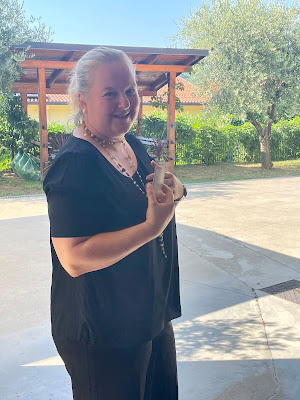
Natasa of Humar winery

2022 Livon Ribolla Gialla RoncAlto DOC Collio: Named after the vineyard where these grapes grow, RoncAlto, that is a cooler area. This wine was more medium-bodied that was more concentrated with lots of salinity and green apple, citrus notes. Nice elegance on the finish.
2022 Bolzicco Ribolla Gialla DOC Collio: Bolzicco is located in Cormos in the lower warmer area near the foot of Monte Quarin between the Collio DOC and Isonzo DOC zones. Producing wines for over 50 years on 20 acres. The aromas on this wine were softer with a hint of wet stone. Light and airy with good acidity and notes of green apple, citrus and orange notes.
2020 Colmello di Grotta Ribolla Gialla DOC Collio: Located in Farra d’Isonzo, lower on the hills towards the plains where the soils are sandier. The winery began in 1965 from a run down property completely renovated by Luciana Bennati and taken over by Dr. Francesca Bortolotto. About 40% of their vineyards are in the Collio DOC with the rest in Livon. This wine was different with every taste making you come back for more. This wine was aged half in amphora. Fresh with grapey and citrus notes and a little creaminess. A tingly lingering acidity on the finish.
2018 Primosic Ribolla Gialla Riserva Collio DOC: The Primosic winery and their production with the Ribolla Gialla grape was one of the most memorable for me personally of the trip. I’ve never been a fan of orange wines, but I had a couple on this trip that changed my opinion of these wines, especially the Ribolla from Primosic. The first wine of the Consorzio when it began was the “Numero Uno” wine from Primosic. Carlo Primosic at the end of the 19th century supplied wine merchants from the south Austro-Hungarian empire that transported the wines to Vienna. In the 50’s Silvan Primosic relaunched the production following the World Wars with the 1st bottling in 1964. Today Silvan joins his two sons, Boris and Marko, whom I had the pleasure to join for dinner one evening. This wine spends a minimum of 30 days on the skins and 2 years in oak. Medium-bodied with an apricot and honeysuckle nose. This wine had great energy, but at the same time was refined showing some firm tannin, good acidity with the apricot notes continuing on the palate. This wine can age for over 20 years.


Food Pairings with Ribolla Gialla
I had a special pairing of this wine at Ristorante Trattoria al Cacciatore in La Subida of Cormòns, a 1 start Michelin restaurant in Collio. We paired the 2019 Primosic Ribolla Gialla di Oslavia Collio DOC with zlikrofi. Zlikrofi is a tortelli from the Idrija Valley created by skillful finger work that was filled with potatoes and chives. It was topped with gravy from the meat roast and aged Montasio slivers. Amazing!
 |
| Zlikrofi |
 |
| Ristorante Trattoria al Cacciatore |
I will be writing a part 3 including the Pinot Grigio and Sauvignon wines of Collio as well. An abundance of great wines, food and dedicated passionate producers making interesting and quality native wines. Some of the best whites in Italy!
You can find Ribolla Gialla and Friulano wines of Collio on Wine.com.


