Friday, December 9, 2022

Rosé isn't just for summertime!

For us New Englanders the cold weather has arrived and we're awaiting the snow days to arrive.  Some of us are excited about it and many aren't.  Of course it's more common for folks to get into the mindset of drinking rosé wines when the weather is warmer.  If you're lucky enough to have fantastic weather year round than you may always have rosé in mind as a choice for your beverage selections or wine pairings with meal.  Either way, I'd like to think the average wine consumer has gotten past the point of considering rosé wines as a pink, inexpensive wine, and has surpassed the thoughts of comparing it to white zinfandel.  I definitely hope we're past that point for the majority of wine drinkers out there.  If not, hopefully these suggestions below will get to open your eyes to the variety of rosé wines available to you throughout Italy and forget some of those sweet laden wines without much character. 

rose from Italy's region
To start, you may wonder what exactly is a rosé wine and how does it get that pinkish hue?  Blending red and white juice from the grapes or an addition of food coloring?  Nope!  There are many shades of rosé and that is determined by the winemaker's choice of the length of time the skins macerate with the juice as well as the grape itself being used.  It could be a matter of hours or days.  The longer the maceration of the skins with the juice, the deeper the color.   

There are plenty of options to consider today when it comes to choosing a bottle of rosé from all the wine producing countries of the world whether it's Provence or Tavel in France, a rosado from the Navarra in Spain, the United Status, Germany, Australia or Portugal.  The list goes on my friends.  Italy tops the charts for rosé as there are many variations in styles from northern to southern Italy.  I'm generalizing here, but you'll find more softer, delicate. crisp rosé from northern Italy vs. fuller bodied, ripe, fruit forward rosé of southern Italy due to the more intense heat.

This is what makes Italy so unique.  There isn't just one region, except for Puglia, that stands out when discussing the rosé wines from Italy.   Many regions produce rosé in different styles from different grapes.  There are hundreds of native Italian grapes and so the challenge continues in understanding Italian wines.  Below is a list of just some rosé wines found from a variety of different regions in Italy, but of course you'll also see wine producers making rosé from other grapes as well.  This is just to give you an idea of some rosé produced throughout Italy.

Puglia ~ Some of the best rosé produced in Italy comes from Puglia, in particular from the area of Salento.  Rosé wines in Puglia may be produced from the Negro Amaro, Primitivo or Aglianico grapes.

Abruzzo ~ Rosé in Abruzzo is known as Cerasuolo d'Abruzzo and is produced from the Montepulciano grape.

Valle d'Aosta ~ Rosé in the Valle d'Aosta is made from the Premetta grapes.

Sicily ~ Rosé wines in Sicily can be made from the Frappato, Nerello Mascalese or Nerello Cappuccio or even Nero d'Avola grapes.

Alto Adige ~ A fuller style rose' produced in Alto Adige you may find from the Lagrein grape.

Veneto/Lombardia ~ Rosé from these two regions can be found around Lake Garda, but where near Lake Garda exactly determines the grapes.  It may be from the Marzemino or Corvina grapes, but most popular of all is the Bardolino Chiaretto.

Rosé is a very versatile wine, but what you pair it with depends on what country you are purchasing the wine from and whether it's light, crisp and dry or full-bodied with richer fruit.  Don't be afraid to pair it with many dishes as you may be surprised as to how well it compliments the dish, but also don't be afraid to ask the wine salesperson their recommendations based on the style you're purchasing. There are lots of options when it comes to rosé, which makes it part of the fun of experimenting with. 

Rosé wines aren't typically ones you'll want to hold onto either.  I'd recommend drinking them within a year of production.  The fresher the better.  It's not a wine you'll want to store that will get better with age typically.  So make sure to play around with some rosé and have fun!  Make sure it's slightly chilled beforehand, grab a glass and you're good to go.  Let me know what some of your favorites are.

Here's a prior list of some of my previous writings on rosé from around Italy.


This article was originally published for my column, Uncorked Italy, in the former Bostoniano magazine.

Saturday, December 3, 2022

Caprese Paired with Prosecco

I hope everyone is enjoying their holiday season for family, friends and loved ones.  Tis' the season to indulge in food and wine along with trying new dishes prepared by friends and family.  Appetizers are in abundance while you're sipping on a glass of wine.  Cheese is always one of everybody's favorites and there is nothing like a gourmet cheese.  That combined with the right wine pairing can send the palate into heaven.  Today our Italian Food, Wine & Travel group (#ItalianFWT) is exploring a variety of Italian cheese and wine pairings to share with you today.   


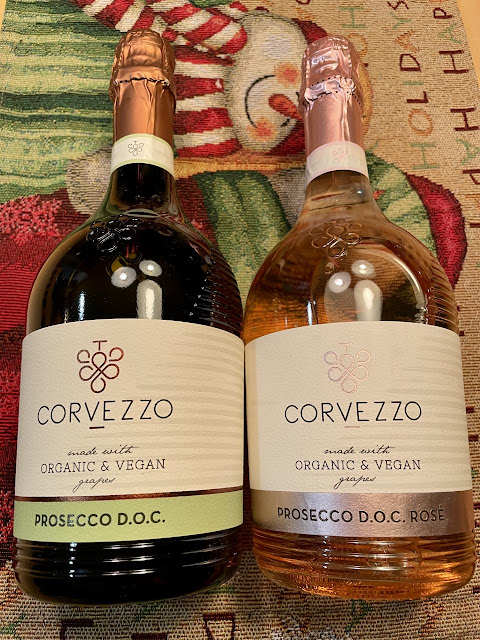
With our recent family vacation, my little guy’s birthday and Thanksgiving life has been busy.   I took a simpler route today of pairing a classic caprese salad with recent vintages of Prosecco from Corvezzo whom I featured one other time here.  The Corvezzo family founded the winery in 1960 by the current and owner and winemaker’s grandparents.  Since 2009 Giovanni Corvezzo, 3rd generation, continues to have a heightened focus on sustainability and reducing their carbon footprint. 


2020 Corvezzo Prosecco Extra Dry and Prosecco Rose

The Corvezzo winery occupies 380 acres in the Veneto region in northeastern Italy in the village of Cessalto near Treviso.  This area has a unique microclimated affected by the cool Dolomite Mountains along with the warmth and sun of the Adriatic Sea.  Their style is “fresh and bright” and this rang true in the wines I enjoyed that I’m sharing today.   


When the 2nd generation of the Corvezzo family took over they expanded the acreage and were some of the early adopters of sustainable approaches to winemaking along with integrated pest management in the 70’s.  In the 80’s they banned synthetic herbicides.  A year after Giovanni took over he began the process of becoming organically certified, which can take up to 7 years.  Half way through that timeframe he lost half his production due to the vines and grapes not being used to withdrawing from the pesticides and herbicides.  Today the vines have adapted and have become stronger because of it producing abundant yields with better fruit quality.  Giovanni states that the “skins are thicker, and this helps wines develop better aromas”.  These skins also help protect it from the rains and developing parasites.   


In addition to being organic these wines are also vegan.  Animal products used in the production of the wines were replaced by using bentonite clay for fining.   You’ll notice on these bottles that on the front label they don’t show certified in the US due to particular regulations and are labeled as “made with organic and vegan grapes”.  Although, throughout Europe, these are certified both within the winemaking facilities and the vineyards.  Since 2020 the winery is also looking into becoming biodynamic. 


Mozzarella originates from the southern part of Italy in the region of Campania since the 1400s. It comes from the word, mozzare, which means to cut or top off.  This refers the hand production in which this cheese is produced.  I once made my own fresh mozzarella and the end product was an amazing indulgence.  You must try it if you’ve never attempted it on your own.  In Italy mozzarella is produced from water buffalo’s milk, but in the US is produced primarily from cow’s milk.   


The wines I sampled for this pairing were released from the 2020 vintage.  Corvezzo occupies the largest acreage in Italy for certified organic Glera and Pinot Grigio grapes.  The grapes are both estate grown and the Corvezzo family partners with trusted growers as well that have been educated on organic farming practices, sustainability and the quality that Corvezzo continues to focus on.   

I sampled two Prosecco from Corvezzo both valued well at $13 a bottle.  The 2020 Corvezzo Rose Prosecco DOC Extra Dry Millesimato consists of Glero and Pinot Nero grapes. The grapes are softly cold crushed and pressed and spend 60 days in secondary fermentation using the Charmat method. Lightly salmon colored with bright bubbles to liven up the palate.  Fresh strawberry aromas whaft from the glass with refreshing wild strawberry notes that dance on the tongue.  ABV 11.5% 


The 2020 Corvezzo Prosecco DOC Treviso Extra Dry was a lightly straw colored with tinge of green. 85% of the grapes are Glera with the other 15% DOC admitted grapes. Same process as the prior wine with 60 days in secondary fermentation. Aromas of lemon citrus and peach. Lively bubbles (I typically like them softer since bubbles bother me in my beverages) with a crisp palate and notes of citrus and green apple. ABV 11.5% 


Either of these wines really worked with the caprese salad although if I had to pick one I’d probably go with the Corvezzo Rose Prosecco as I enjoyed the strawberry notes with the dish that I feel played well with the balsamic drizzle. 

Prosecco pairing with caprese salad
What’s your favorite Italian wine and cheese pairing? 
 

Join my fellow Italian cheese and wine lovers as they share some suggested pairings for you to try.  We will not be chatting live on Twitter this monh, but would love to connect with you if you have any questions so don't hesitate to reach out.  We love to hear from our readers!

Camilla is preparing "A Cheese Board Anchored on a Trio of Italian Cheeses + A Pinot Nero from Alto Adige" at Culinary Cam

Robin is tasting "Piave, Grana Padano and the wines of Lombardia" at Crushed Grape Chronicles

Deanna is drinking "Abbondanza Montelpuciano d'Abruzzo: A Way of Life" at Wineivore

Gwendolyn is trying an "Intriguing Italian Alpine Wine and Cheese: Foradori Bio Teroldego Paired with Their Tyrolean Grey Cow Cheese and Taleggio Mushroom Risotto" at Wine Predator

Wendy is having "A Perfect Start to a Perfect Evening" at A Day in the Life on the Farm

Nicole is traveling to "A Dairy in Veneto: Cheese (& Wine) Tasting at Latteria Perenzin" at Somm's Table


*These wines were provided as samples, but opinions are always my own.
Importer: Origins Organic

Friday, November 4, 2022

The History of Family with Cecchi

When it comes to quality Sangiovese and Chianti Classico wines you can trust, Cecchi, pronounced “Check-ee”, has always been one that I respected.  When I first started meeting folks in the industry and getting to learn about wine I met Andrea Cecchi, one of the 4th generation family members along with his brother Cesare that run the winery today.  This month our Italian Food, Wine & Travel group (#ItalianFWT) hosted by Liz of What’s In That Bottle? takes us through a cavalcade of Chianti along with my feature of Cecchi today.

The Winery ~ Cecchi

Luigi Cecchi established the Cecchi winery in 1893.  He was a professional wine taster and served as a wine consultant to surrounding wineries.  In the 1930’s he began exporting his wines around the world and it wasn’t until the 1970’s until their headquarters were established in Castellina in Chianti, one of the communes of Chianti Classico.  The Cecchi brand begin to expand their territories in the 80’s in 90’s into the Maremma of southern Tuscany where they produce Morellino and San Gimignano in the heart of Tuscany known for Vernaccia.  In 2000 they crossed borders into Umbria acquiring land to produce Sagrantino.  You can find the expanded variety of their wines in these additional territories under the labels Tenuta Alzatura, Val delle Rose, Castello Montauto, Villa Cerna and Villa Rosa. 

Although the Cecchi winery is a large enterprise that occupies 950 acres producing about 8.5 million bottles annually, they have always had an eye for the future with respecting the traditions of the past.  Their focus on finding ways to provide minimal environmental impacts in order to preserve their habitat and the natural resources available as well as energy consumption.  In the 2000’s, due to the lacky of water, Cecchi was the first Tuscany business that built sewage treatment facilities to reduce energy consumption and recycle and purify water.  They now utilize three of these systems at their Cecchi winery, Val della Rose and Villa Cerna.  They received the Eco Efficient prize for this development.

As time progresses they continue to increase their vines that are certified organically currently at about 570 acres with a few of their wineries certified in the both the cellar and production facilities.  They continue to experiment new clones, technologies and ways of farming and operating their vineyards. 

The Wines

I received as samples a couple of their Chianti Classico wines until the ‘Storia di Famiglia’ line of wines that is a celebration of the history of the Cecchi family.  The 2020 Cecchi Chianti Classico Storia di Familigia DOCG is more than just your every day wine.  It’s produced in the traditional style, fresh and clean.  Made of 90% Sangiovese and 10% Colorino and Canaiolo this wine spends 12 months in wood casks with 2+ months in the bottle.  Ruby red in color with garnet hues the glass gives out those classic cherry aromas.  Medium-bodied and tart cherry notes on the palate with a hint of leather this wine is very well-balanced with a silky finish.  ABV 13.5% SRP $27

2020 Cecchi Storia di Famiglia Chianti Classico

2015 Andrea claims is one of the best vintages in 20 years with great aging potential and balance per an article I read written by John Mariani in Forbes.  Their 2015 Cecchi Chianti Classico Riserva Storia di Familigia DOCG represents the quality and purity of Sangiovese that Cecchi produces only in the best vintages.  Made of 90% Sangiovese with 10% Cabernet Sauvignon blended.  This wine spends 12 months in oak casks with over a year in the bottle. 

The color was garnet with tinges of brick on the rim.  The aromas of this wine were earthy and savory.  As crazy as this sounds something about this wine smelled of a mushroom, beef stew.  Medium-bodied with cherry and tobacco notes along with elegant tannins backed by some juicy acidity.  A more layered Chianti Classico compared to the prior shared.  ABV 13% SRP $48

2020 Cecchi Chianti Classico Riserva Storia di Famiglia

Since it was a weekend when I was tried these wines I felt like some homemade meatballs and sauce, or gravy as some may call it, was in order.  Nothing like food for the soul!

Join the Italian food and wine lovers as they share their selections and pairings with Sangiovese this Saturday at 11am EST on Twitter @ #ItalianFWT.  I'll be enjoying some family vacation time, but I hope you can jump on in and join in the conversation.


*These wines were provided as samples, but opinions are always my own.
Importer: Terlato Wines